Wednesday June 3, 2026
Painting a Violin
In January of this year, an acquaintance of mine who is involved with the Children’s Concert Society of Akron reached out to me asking if I would be one of six artists to paint a violin as an auction piece for their fundraiser.
Sure, I thought! Why not?
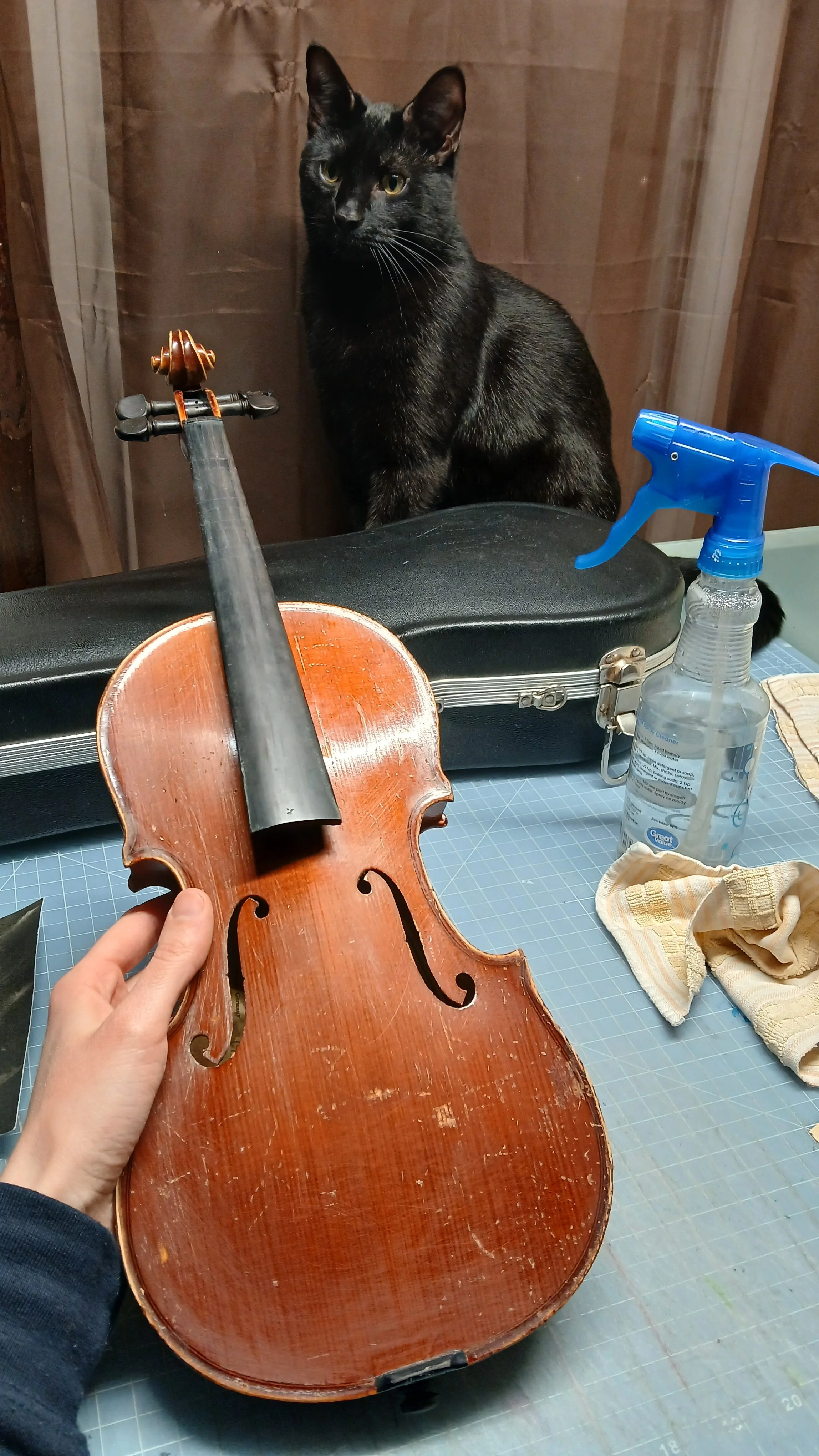
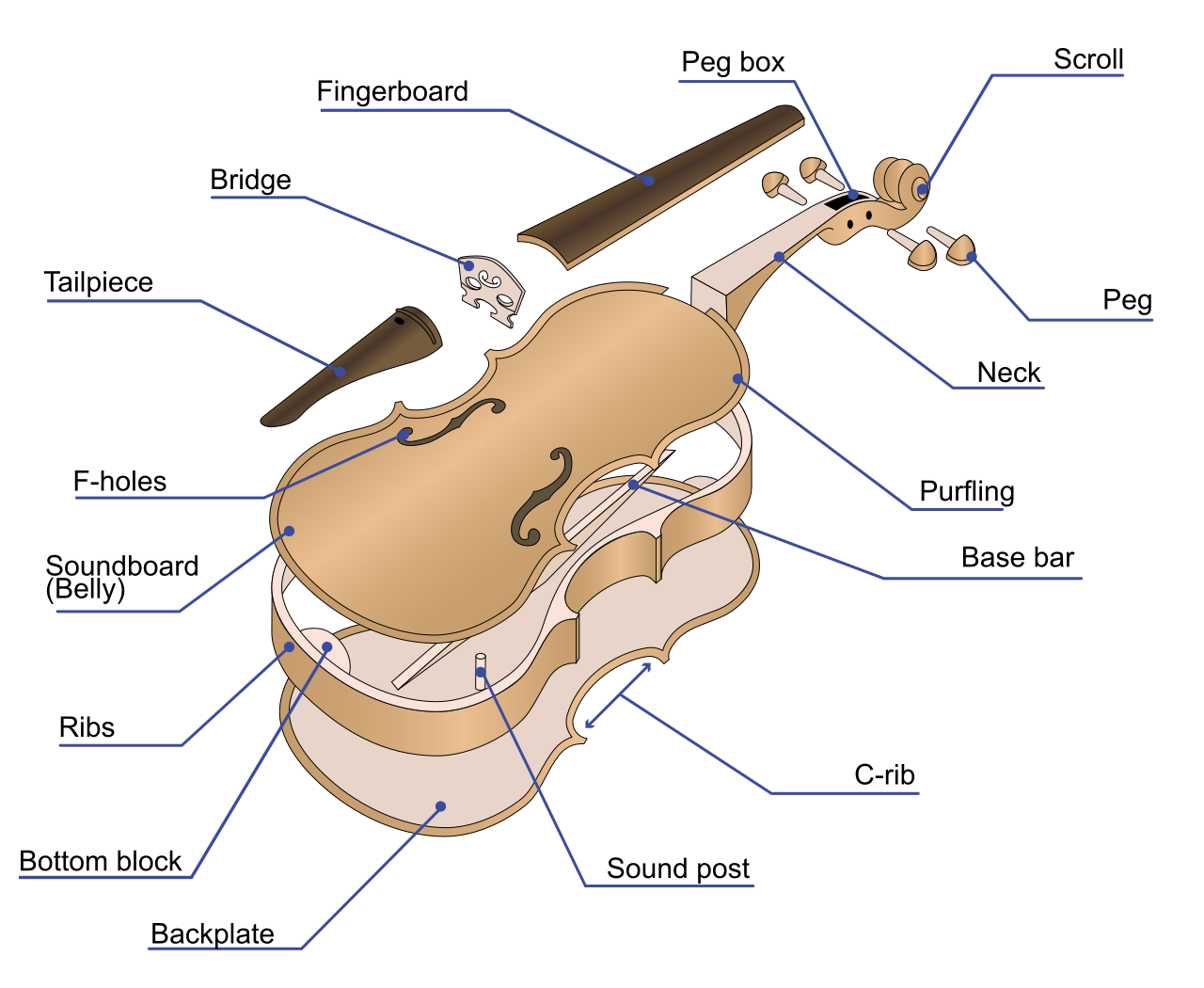
The violin came from the Music & Arts music store in Cuyahoga Falls, OH. It isn’t a full size instrument, but I don’t know enough about violins to know what level it is. It’s definitely intended for a younger student with smaller hands.
My whole life I’ve felt a deep connection to violins and folk music. My dad played the fiddle for many years in The Brick Road Ramblers, an old-timey band, and I was raised going to their gigs. My great uncle Stanley had been a luthier, and I had a cigar box of unused cello bridges that belonged to him. In spite of this, I never handled a violin very much in my life (my preference was for piano). I was afraid at first holding it—it’s such a delicately-build and elegant object.
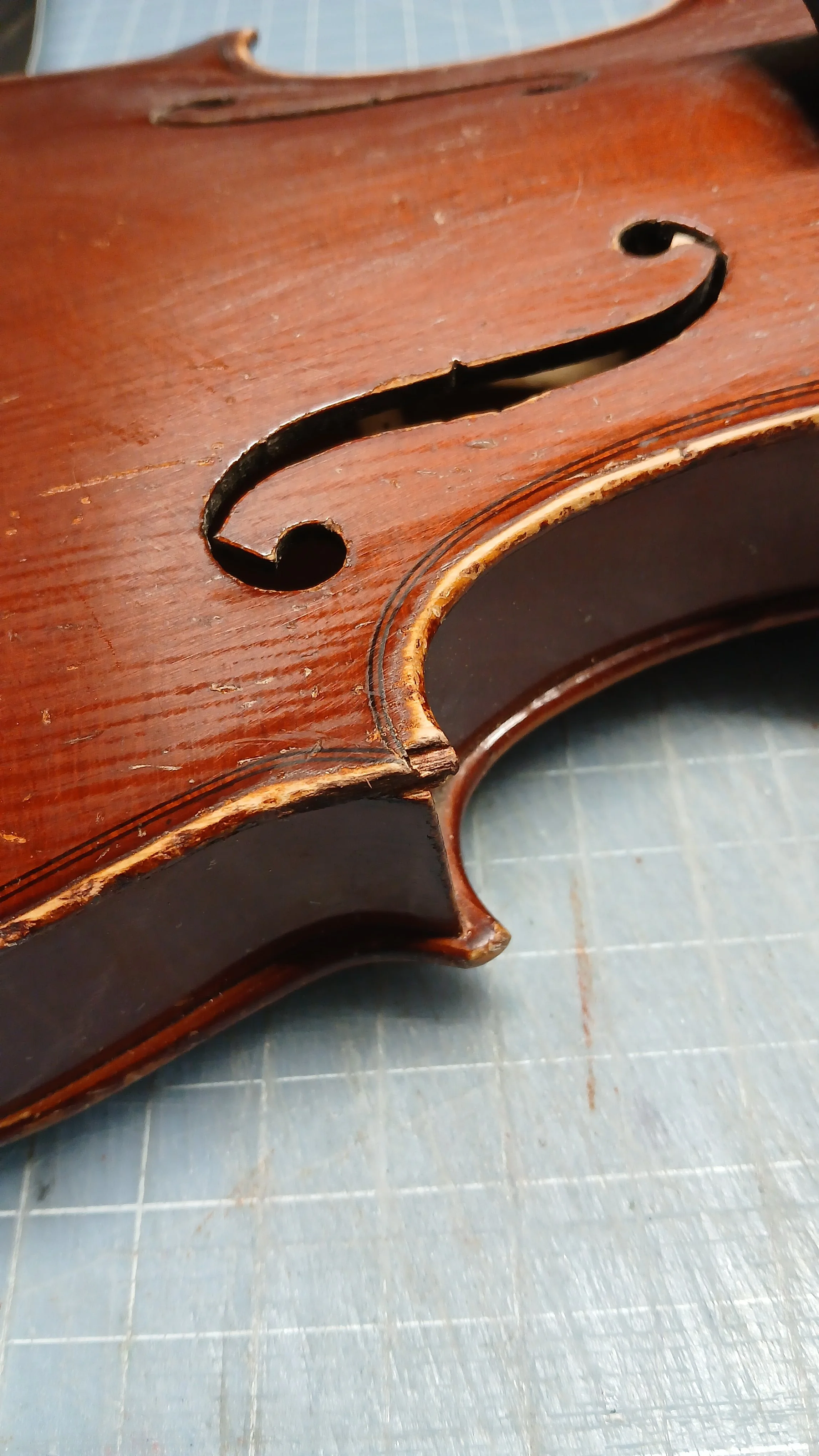
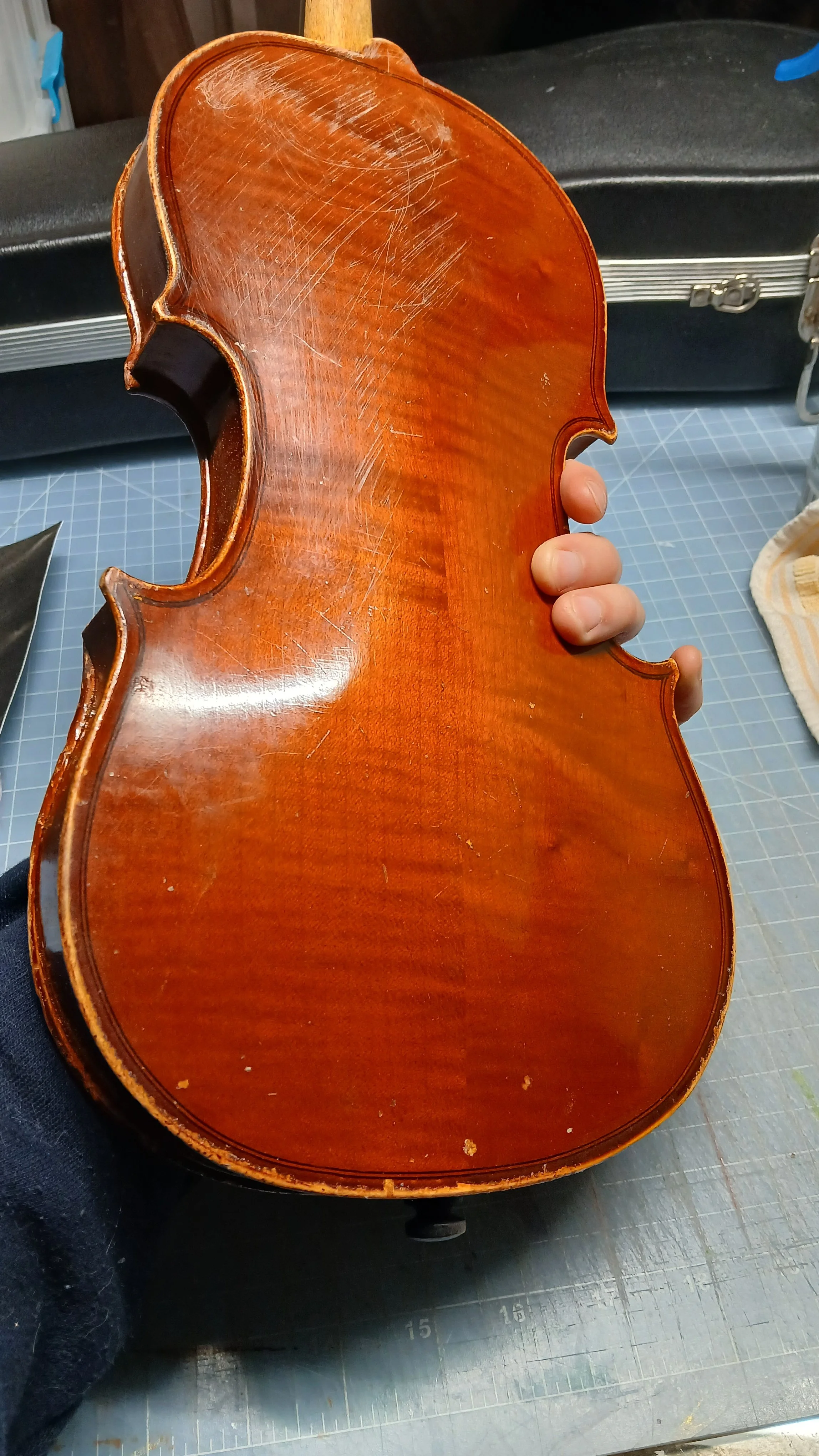
There were scratches and chips in the wood from being played over the last 43 years. The strings, bridge, tailpiece and chinrest were all in the case. I still hadn’t decided if I wanted to incorporate those pieces. In the end, I decided to keep it clean and nix them.
After spending more time becoming familiar with the surfaces, I tried prepared the violin by giving it a good cleaning and a light sanding with fine-grit sandpaper. I wasn’t sure how the gesso primer would sit on the varnished wood. Looking back, the sanding was probably an unnecessary step.
The composition went through several stages as I worked. I don’t like to get too clear of an image in my head of what I want the finished product to look like before I start. I’ll have a vague idea in my head and then allow my imagination to wander as I go.
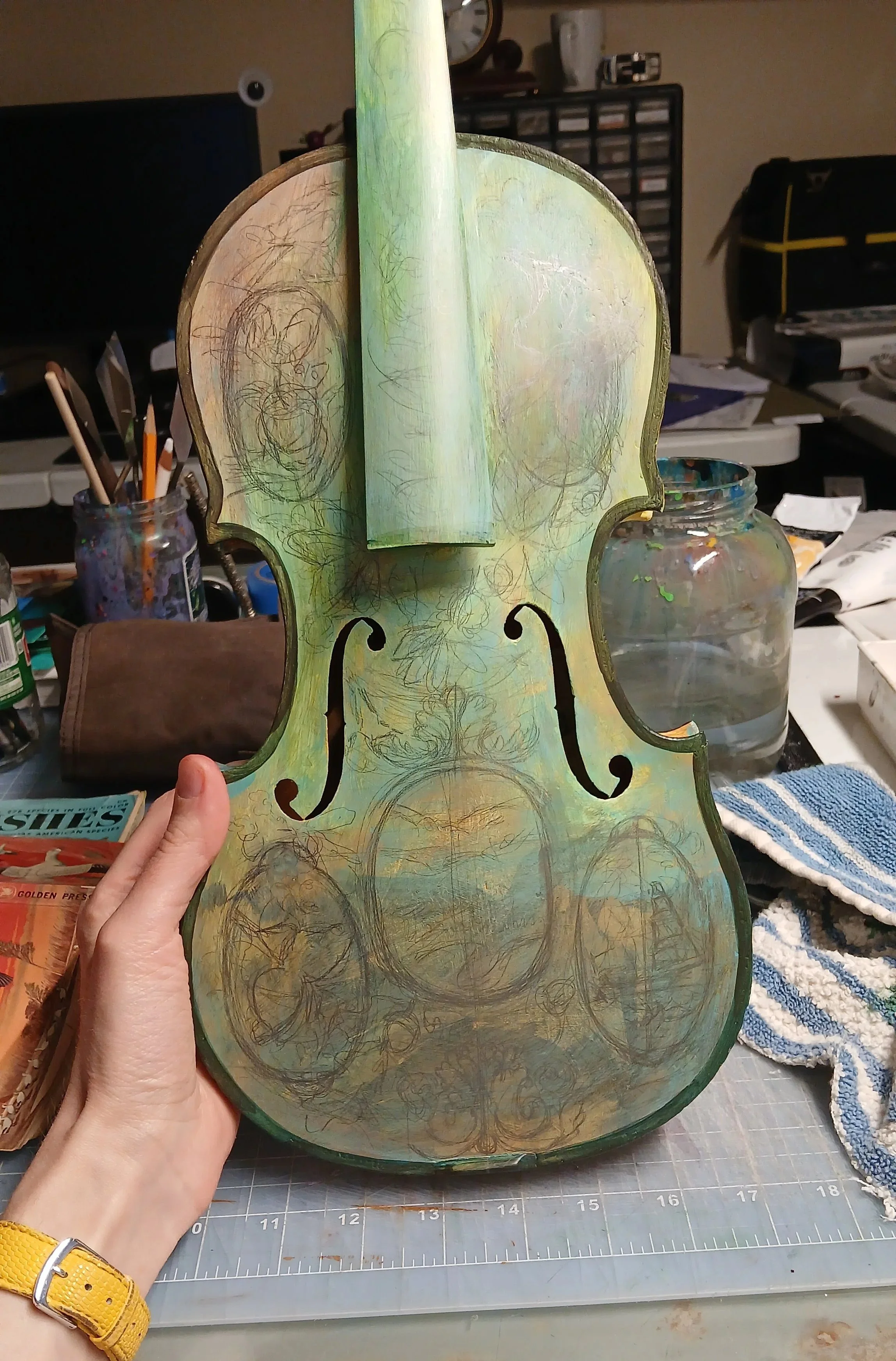
This was my first composition sketch for the front of the violin. I’m very interested in the stylistic motifs and idiosyncrasies from early popular lithographs, especially in advertising and sign painting. The worn wooden surface of the violin inspired me to look at scrimshaw (carved whale teeth), which frequently feature these little vignettes contained in a decorative frame. I’m drawn to scrollwork, cartouches, and banners that frame little scenes.
I was also strongly inspired by the series of Peaceable Kingdom paintings by the American Quaker folk artist Edward Hicks (1780-1849). These paintings are an interpretation of verse 11:1-9 from the Book of Isaiah in the bible which talks about a future time when all beings on Earth—the predators and prey—will live in spiritual and earthly harmony with one another:
"The wolf also shall dwell with the lamb, and the leopard shall lie down with the kid; and the calf and the young lion and the fatling together; and a little child shall lead them."
The foreground of these paintings always depicts a menagerie of animals, many not native to the Americas, coexisting in peace. In the distance, we see William Penn signing a treaty with Chief Tamanend of the Lenape Nation in Pennsylvania. Apparently, this is an apocryphal story.
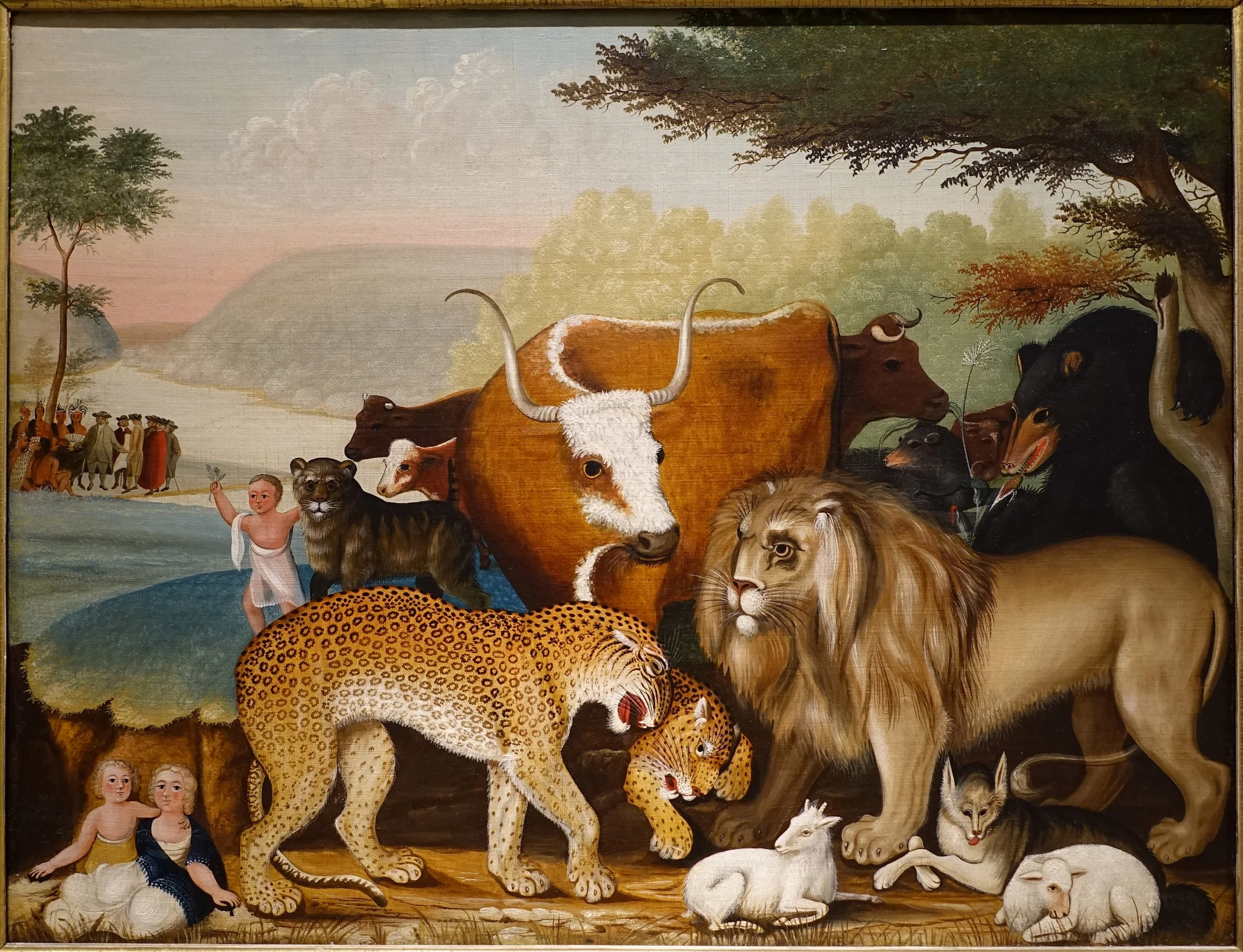
The Peaceable Kingdom by Edward Hicks, c. 1846-1847, oil on canvas - Dallas Museum of Art
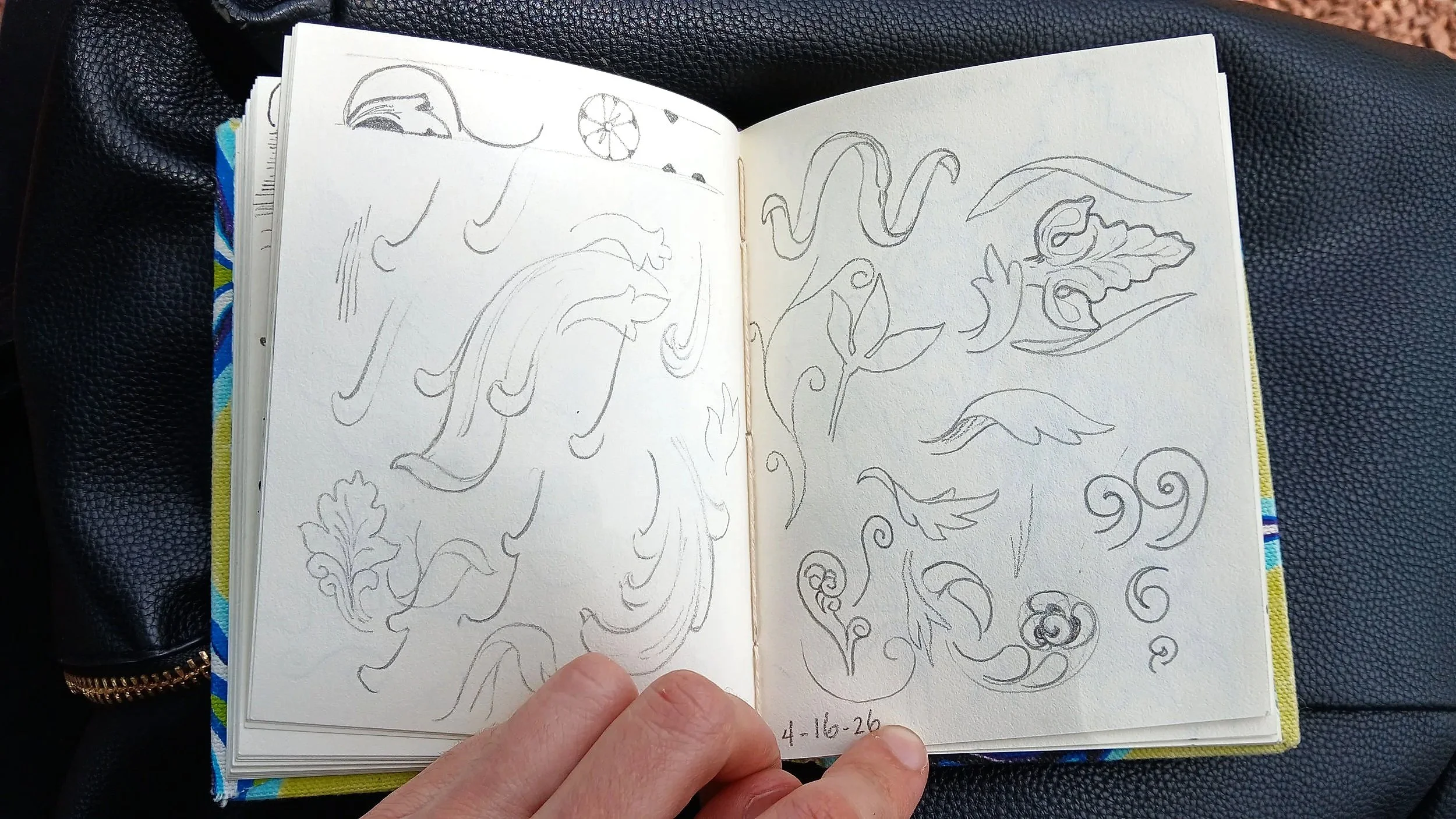
Playing with scrollwork in my sketchbook
Looking through field guides for wildlife and natural history illustrations were also key in sparking my imagination.
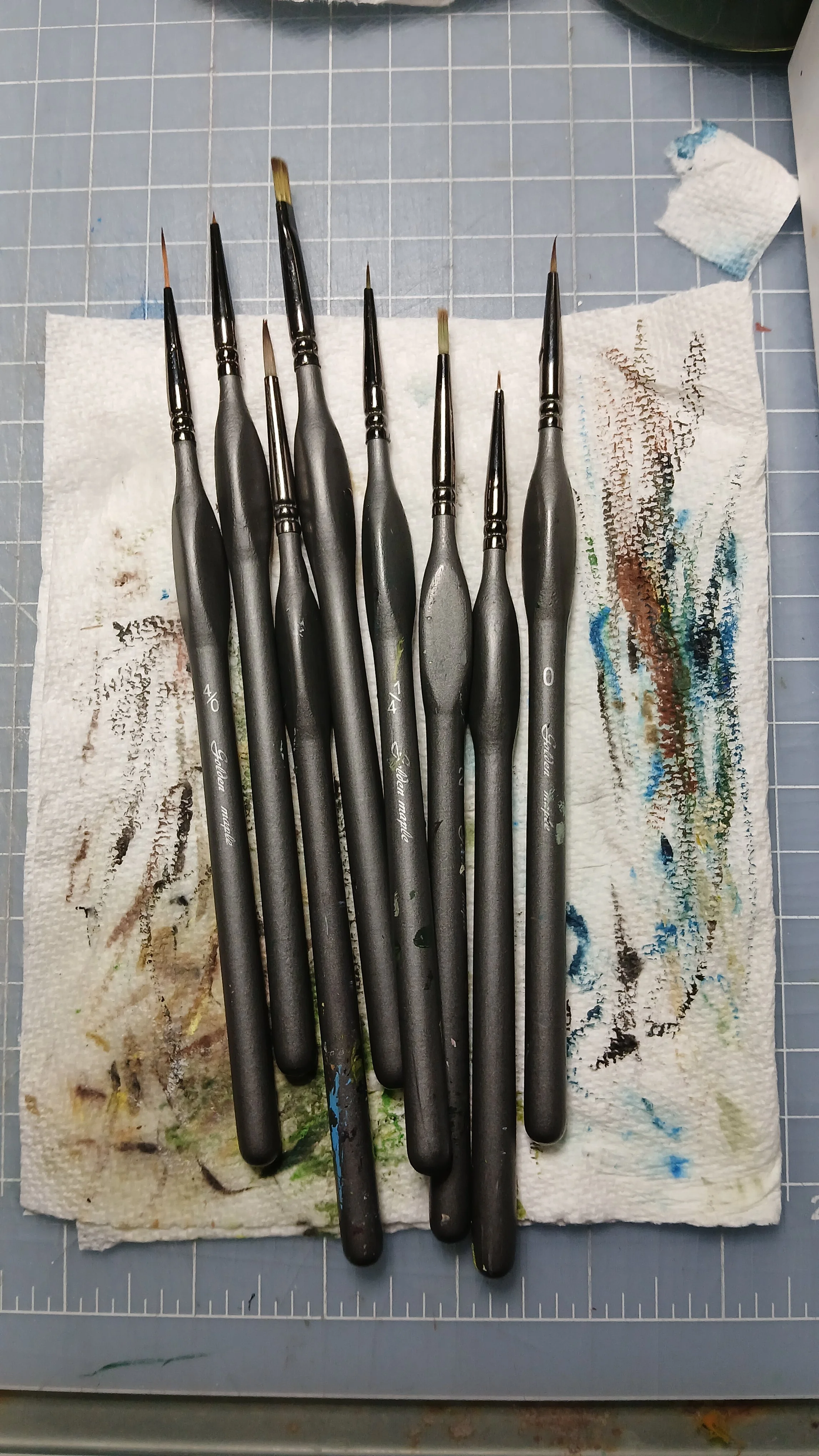
These tiny brushes became my friends!
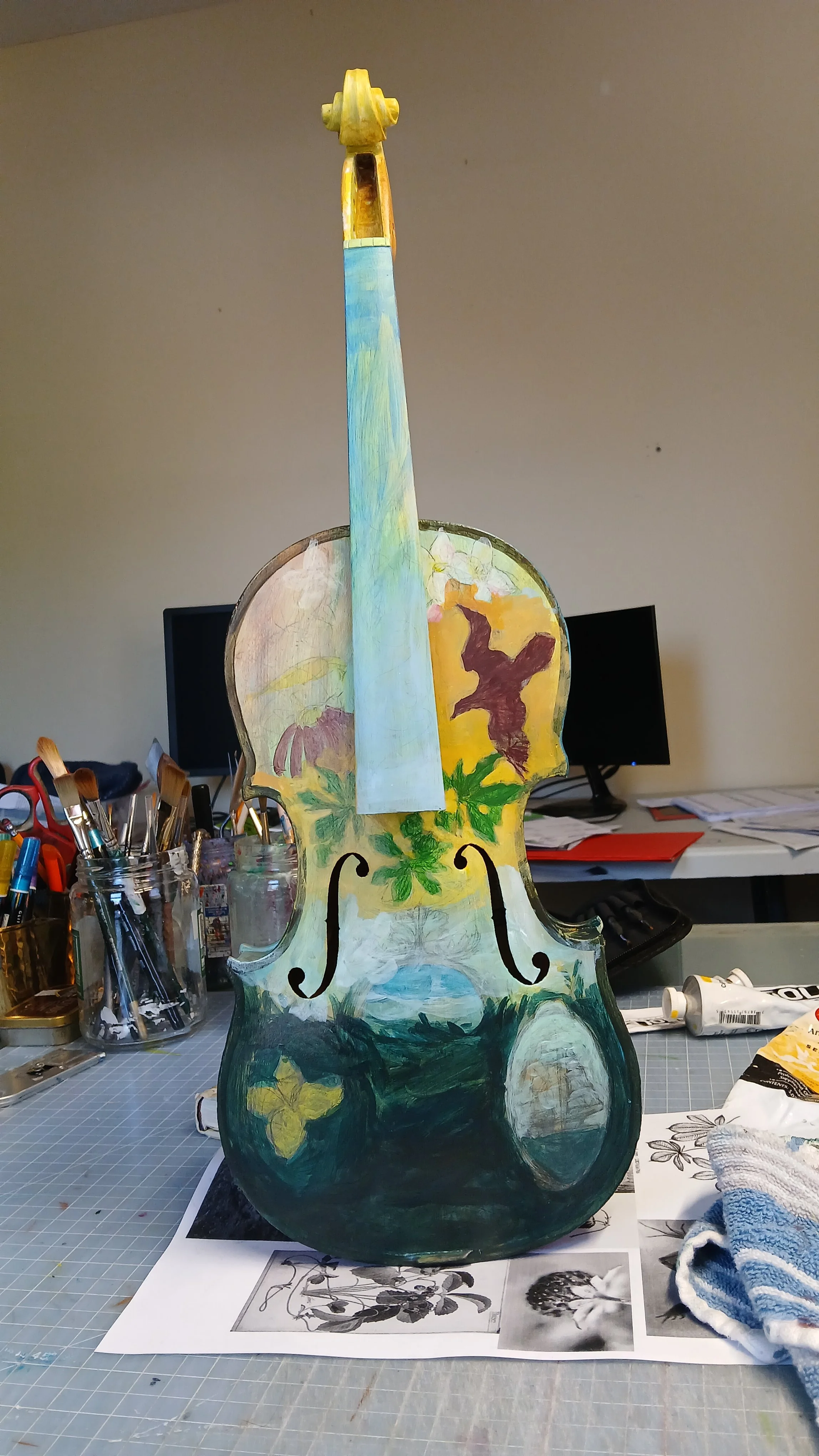
You can see my thought process unfolding in the process pictures. I would try out an idea and then scrap it later. There were buckeye leaves in the middle for a little while, and I wasn’t happy with the little vignettes as I designed it initially. Also note my studio slowly getting deconstructed throughout the process (I moved in the middle of painting. Read Moving in May here!)
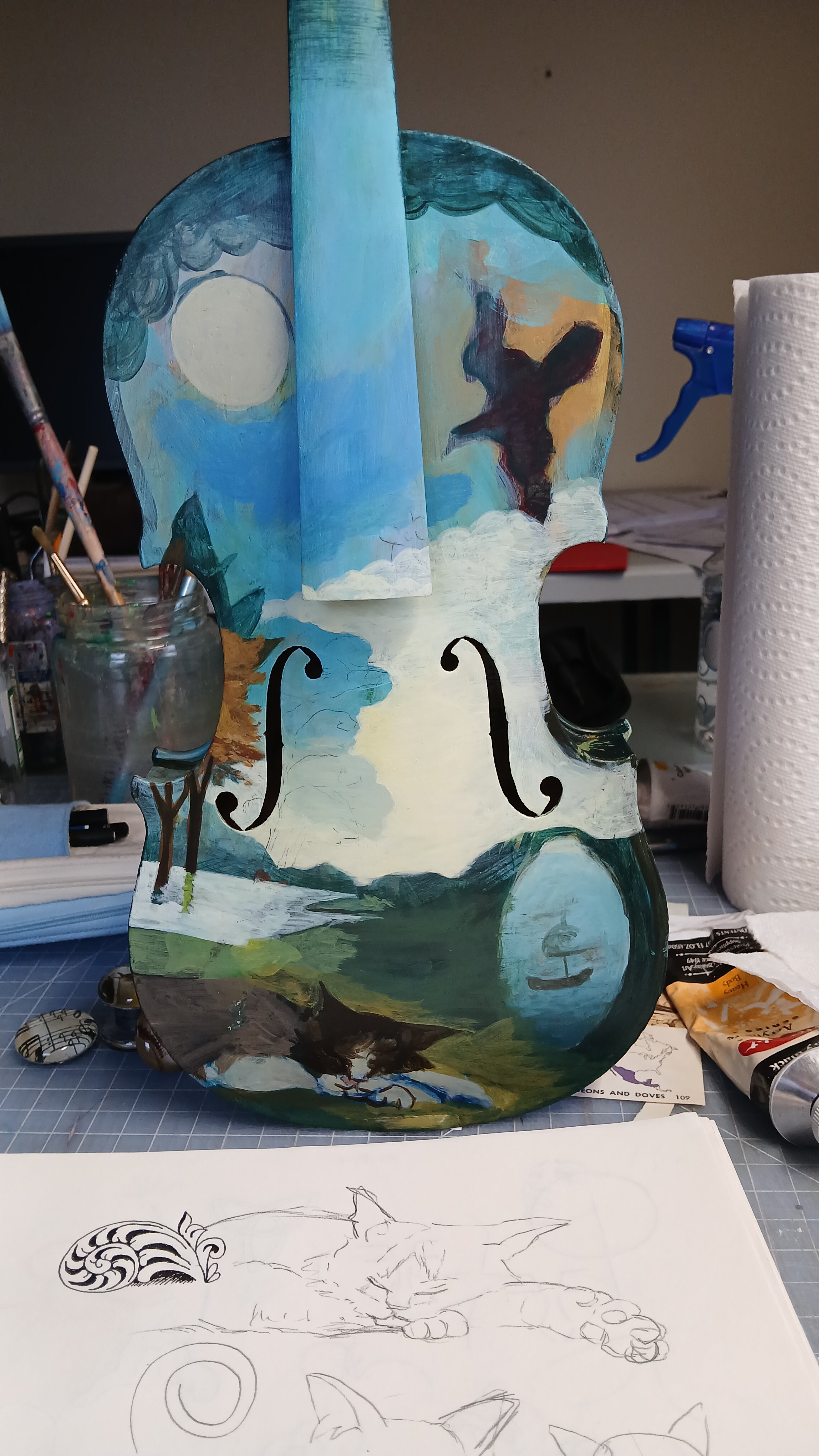
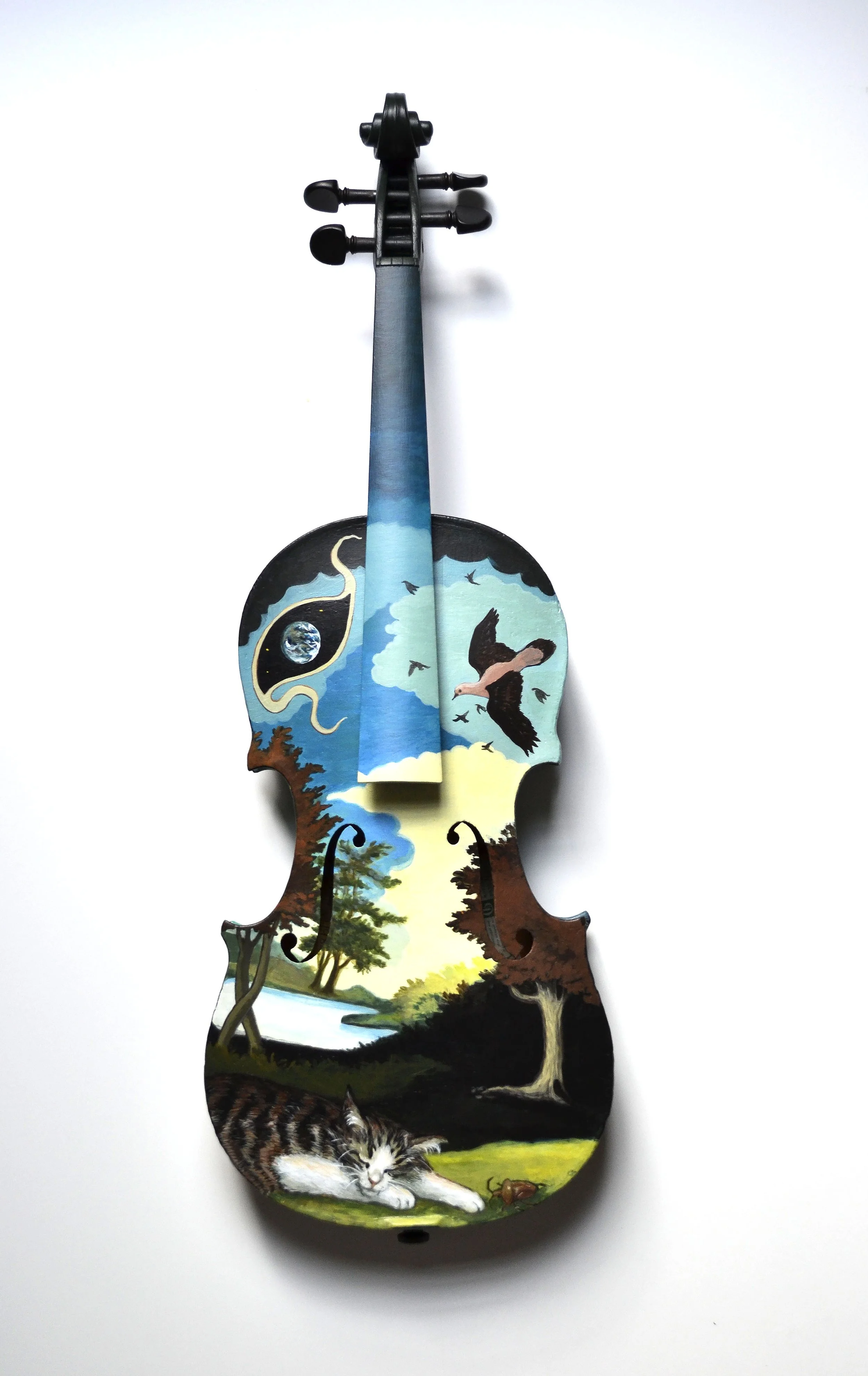
The overall composition comes into focus. By now I was letting go and my imagination was wandering into the idea of the Peaceable Kingdom. That’s when I decided to paint Cosette sleeping in the very front. I couldn’t help but be reminded of El sueño de la razón produce monstruos.
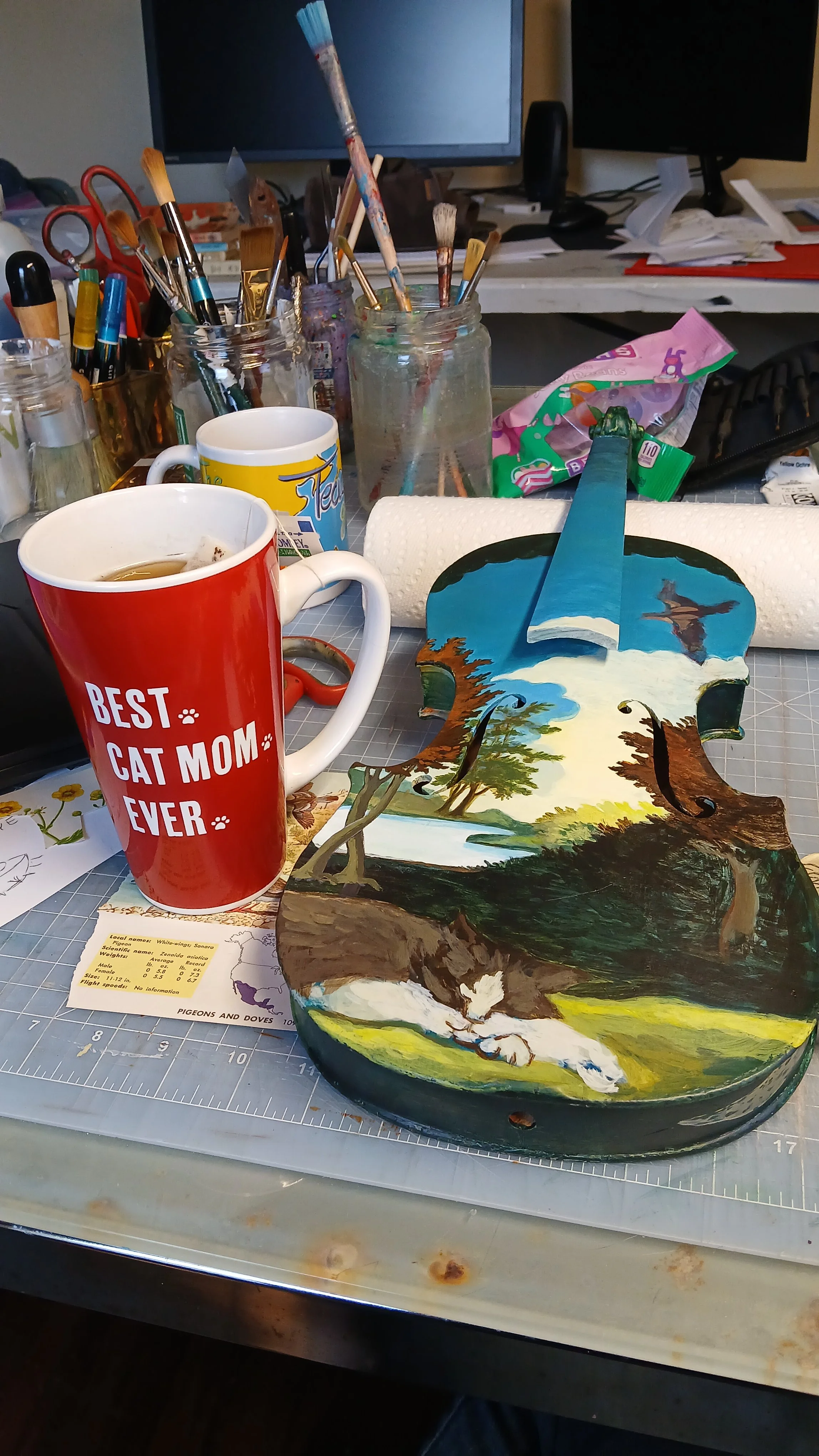
Building up the colors of the landscape, putting in trees, and zeroing in on a color scheme. That is a bag of jelly beans on my table.
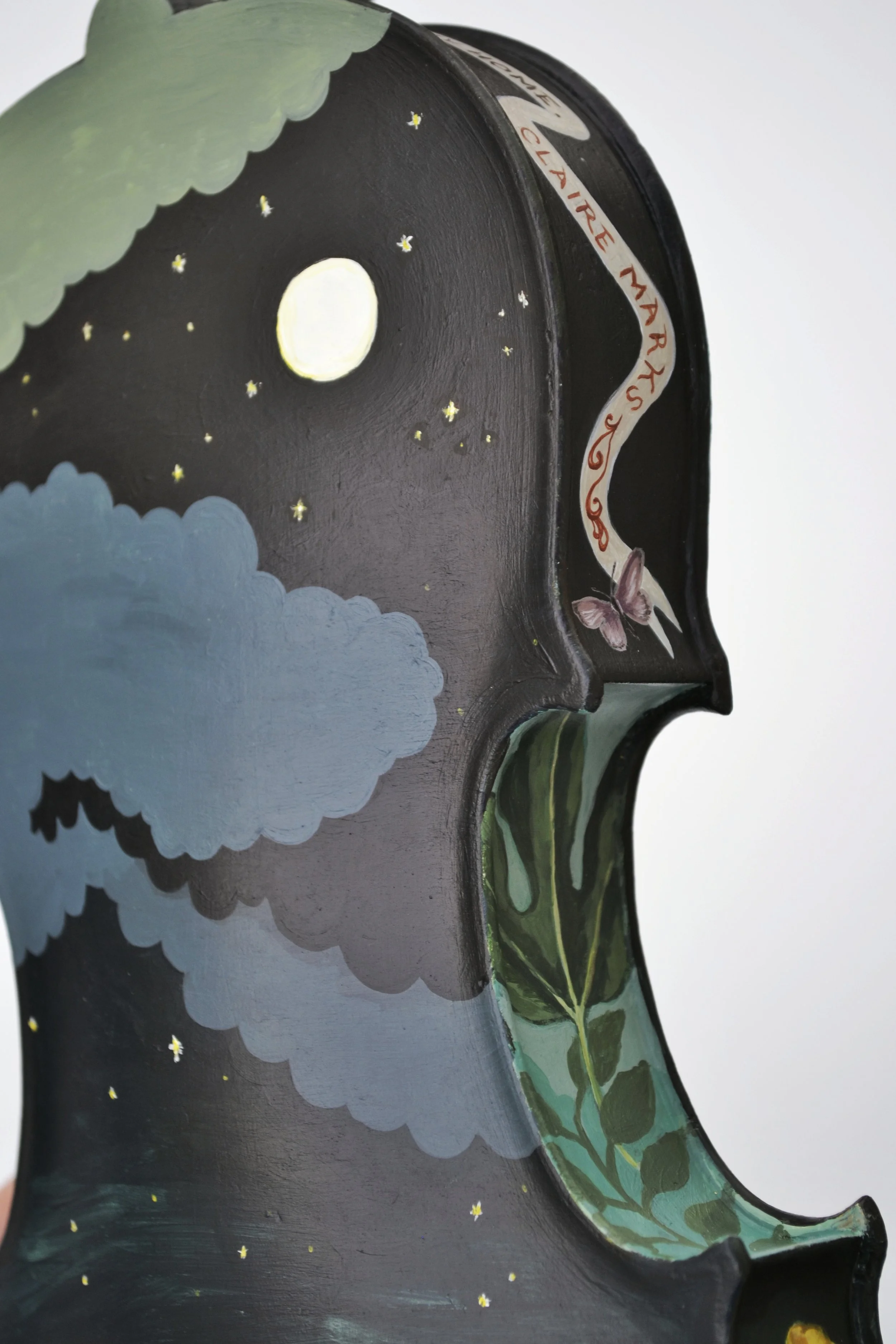
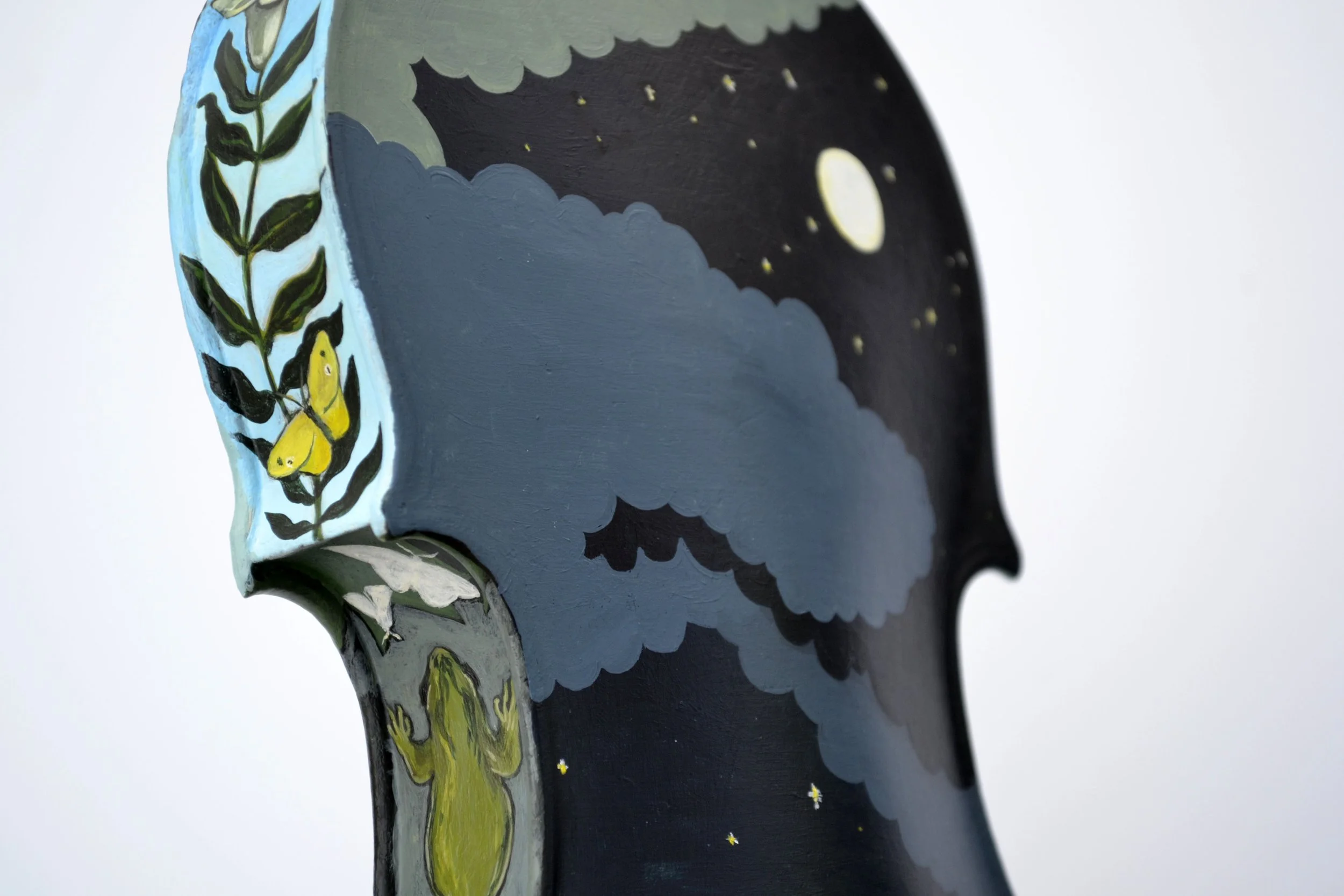
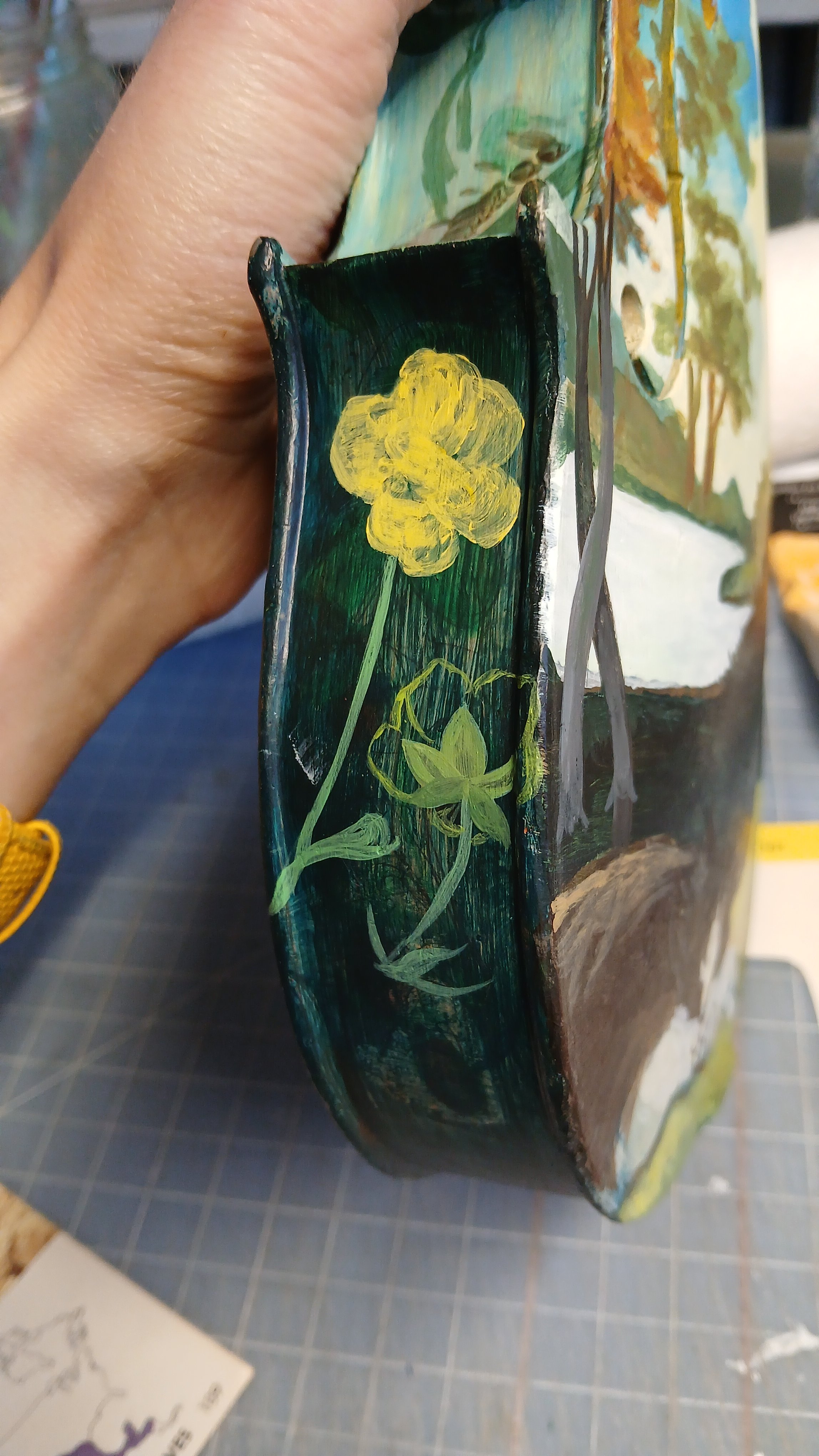
Working on the sides of the violin. I wanted each section to be a little vignette with a different animal, plant, or both. The pigeon on the front is also coming into focus.
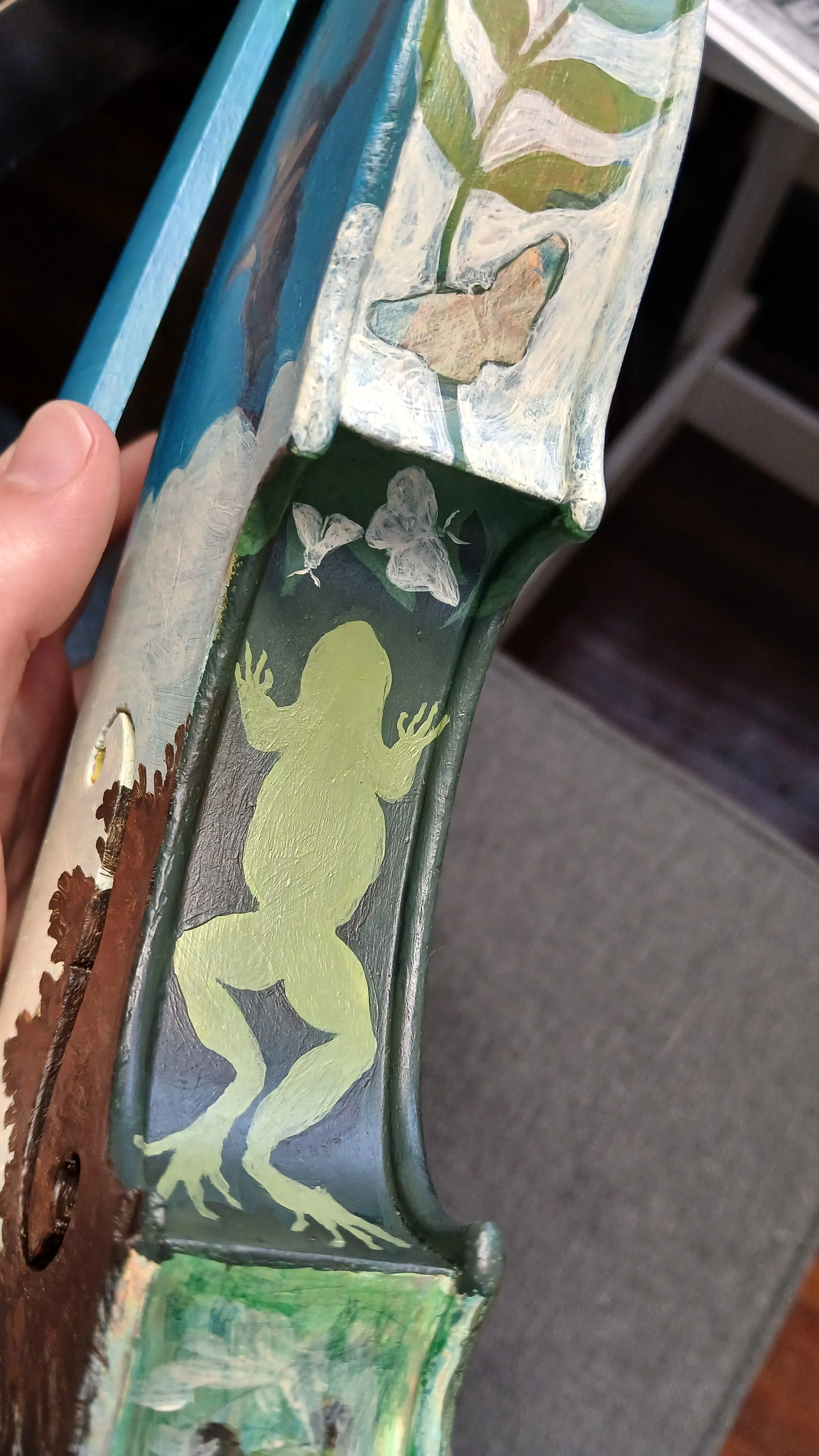
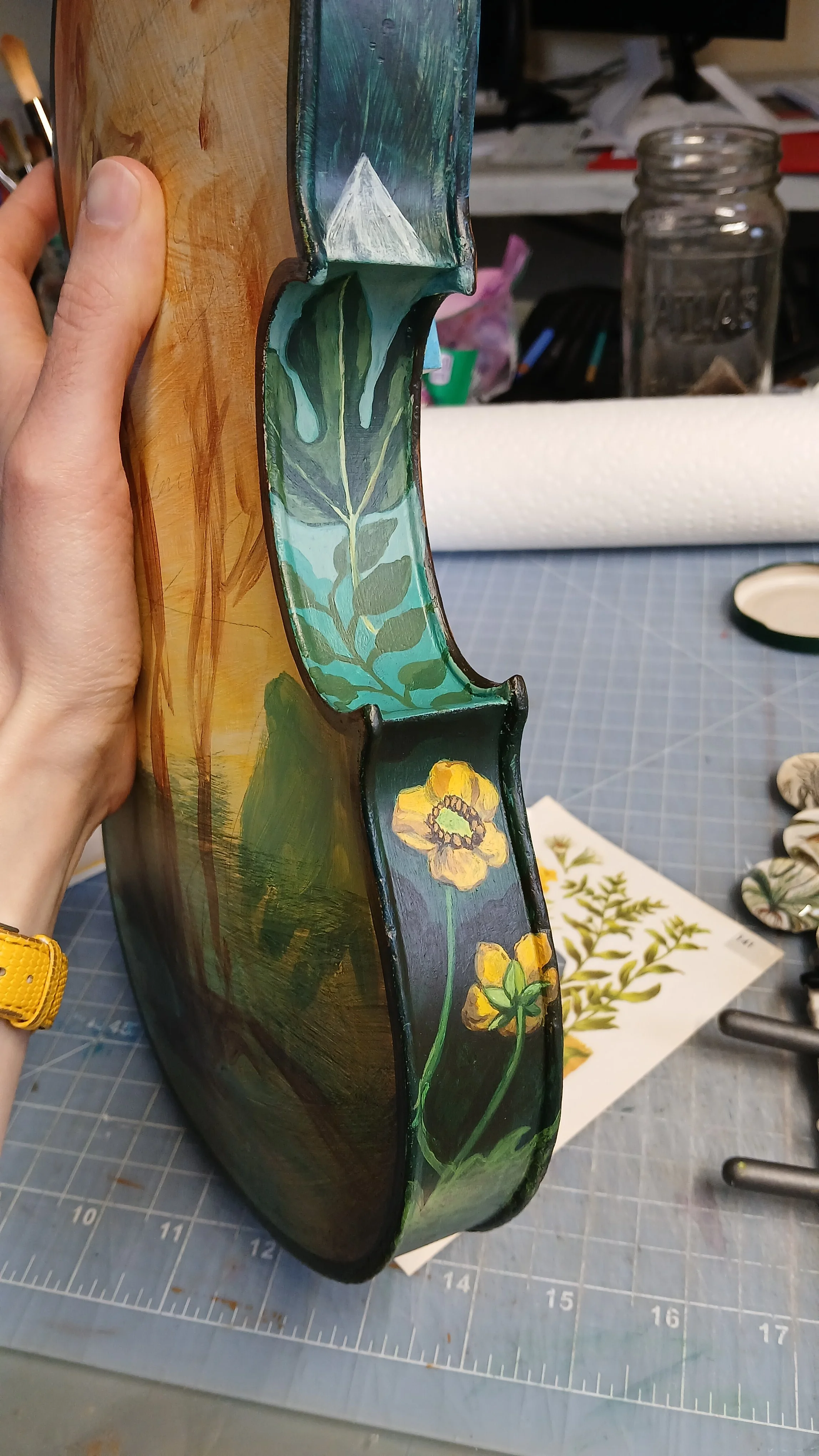
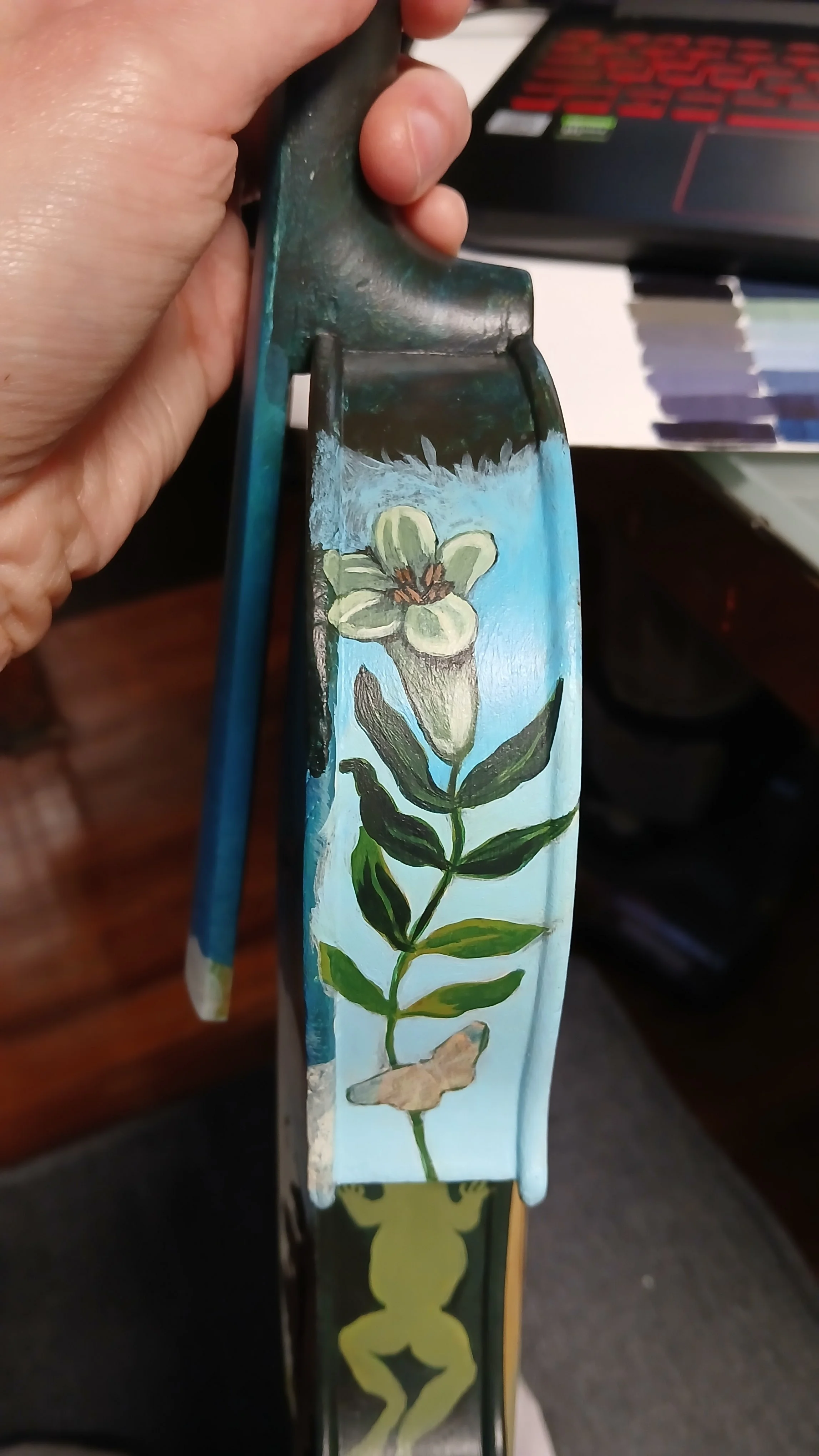
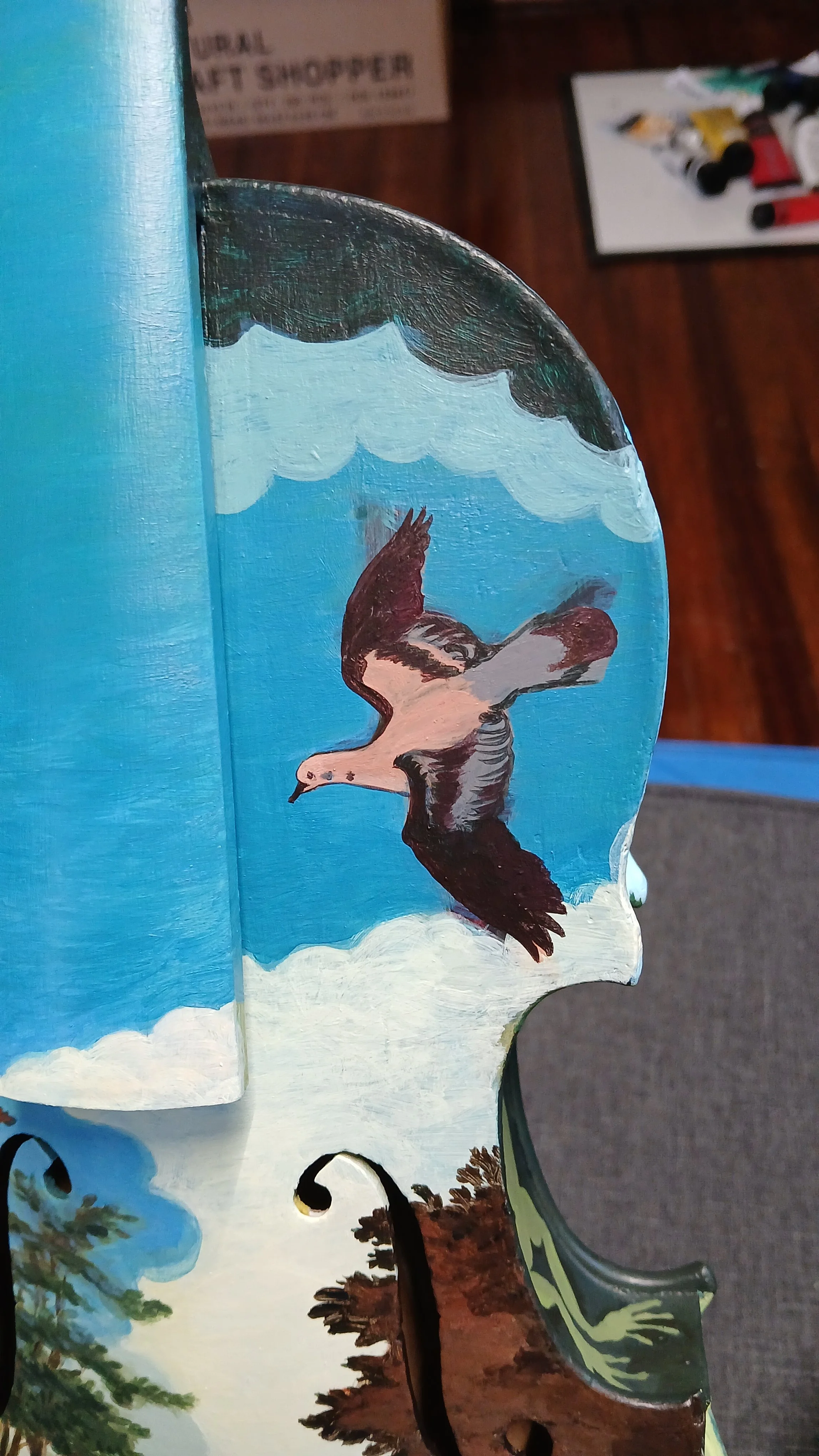
Cosette progress. I didn’t have one single image of her in this position to work from, so I had to come up with a composite image in my head. I worked out the pose in my sketchbook beforehand, which was helpful.
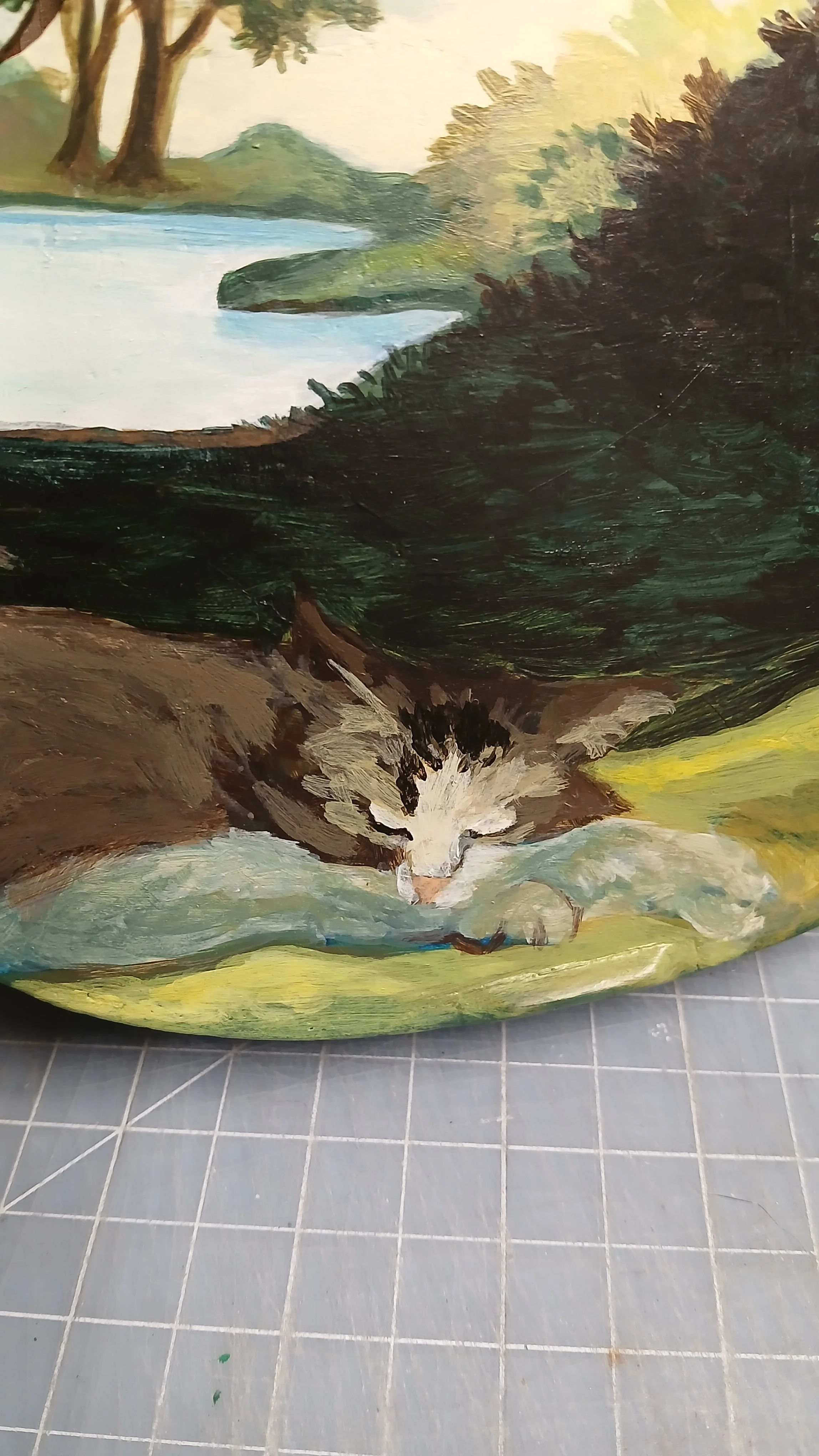
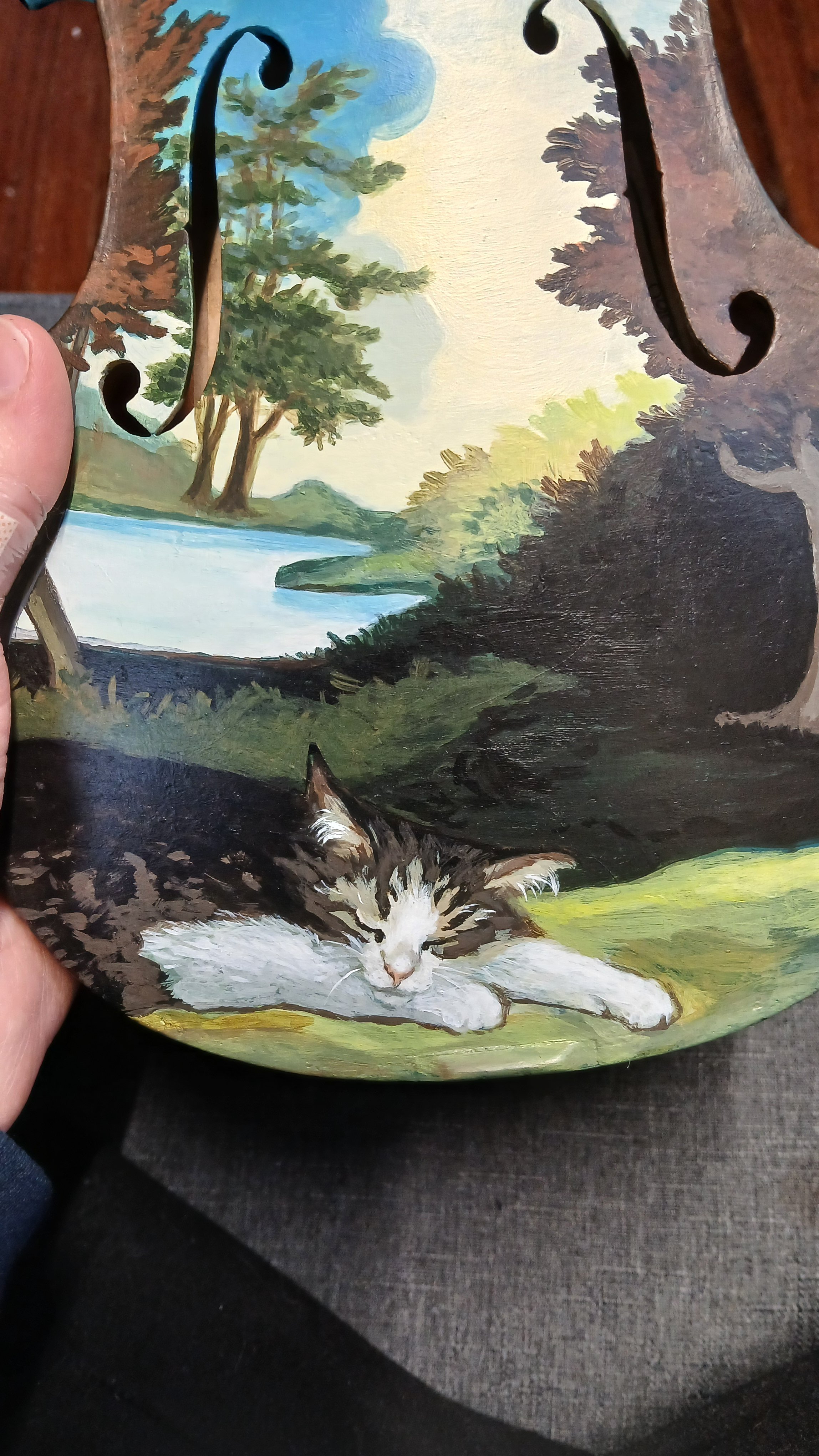
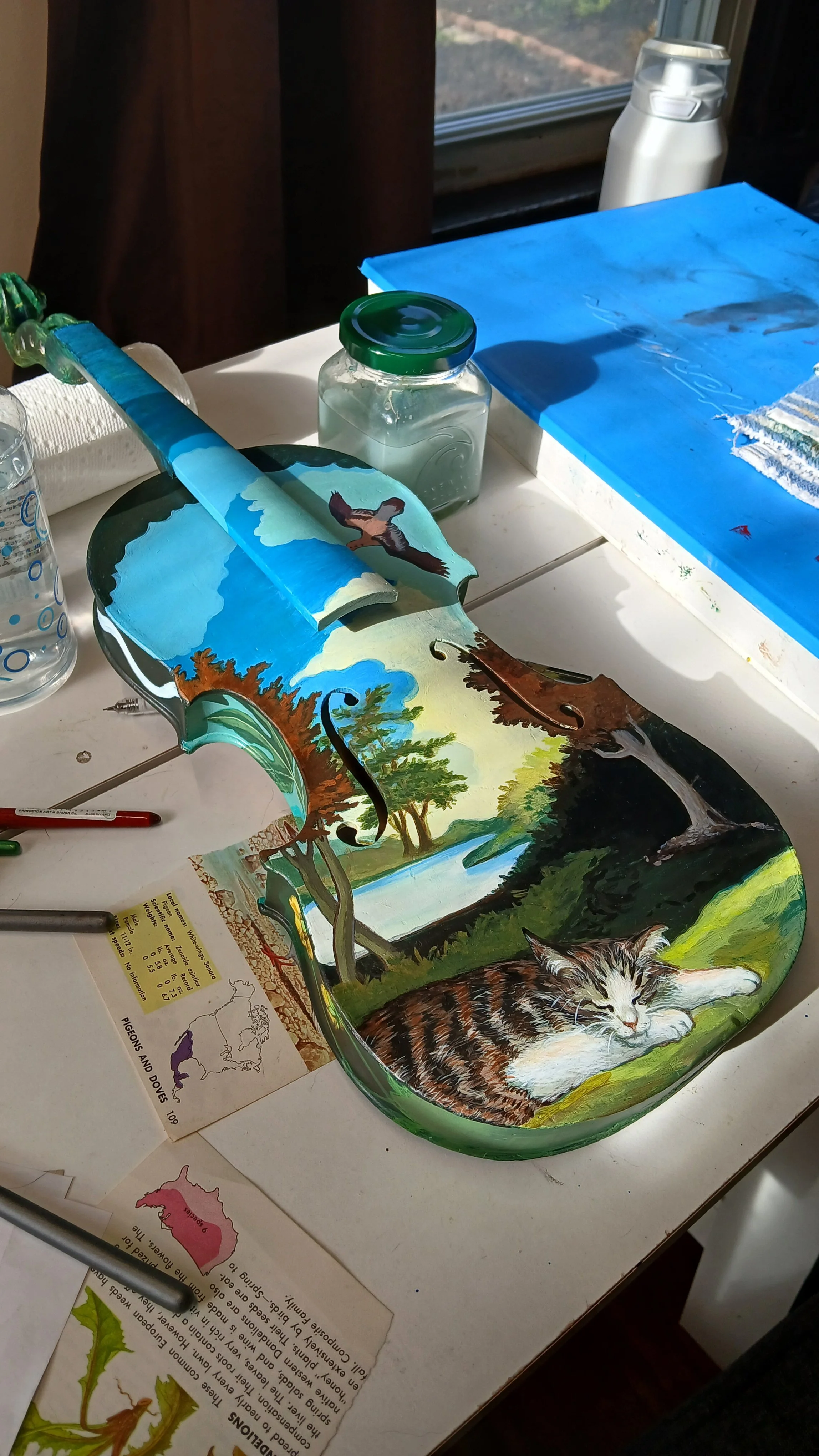
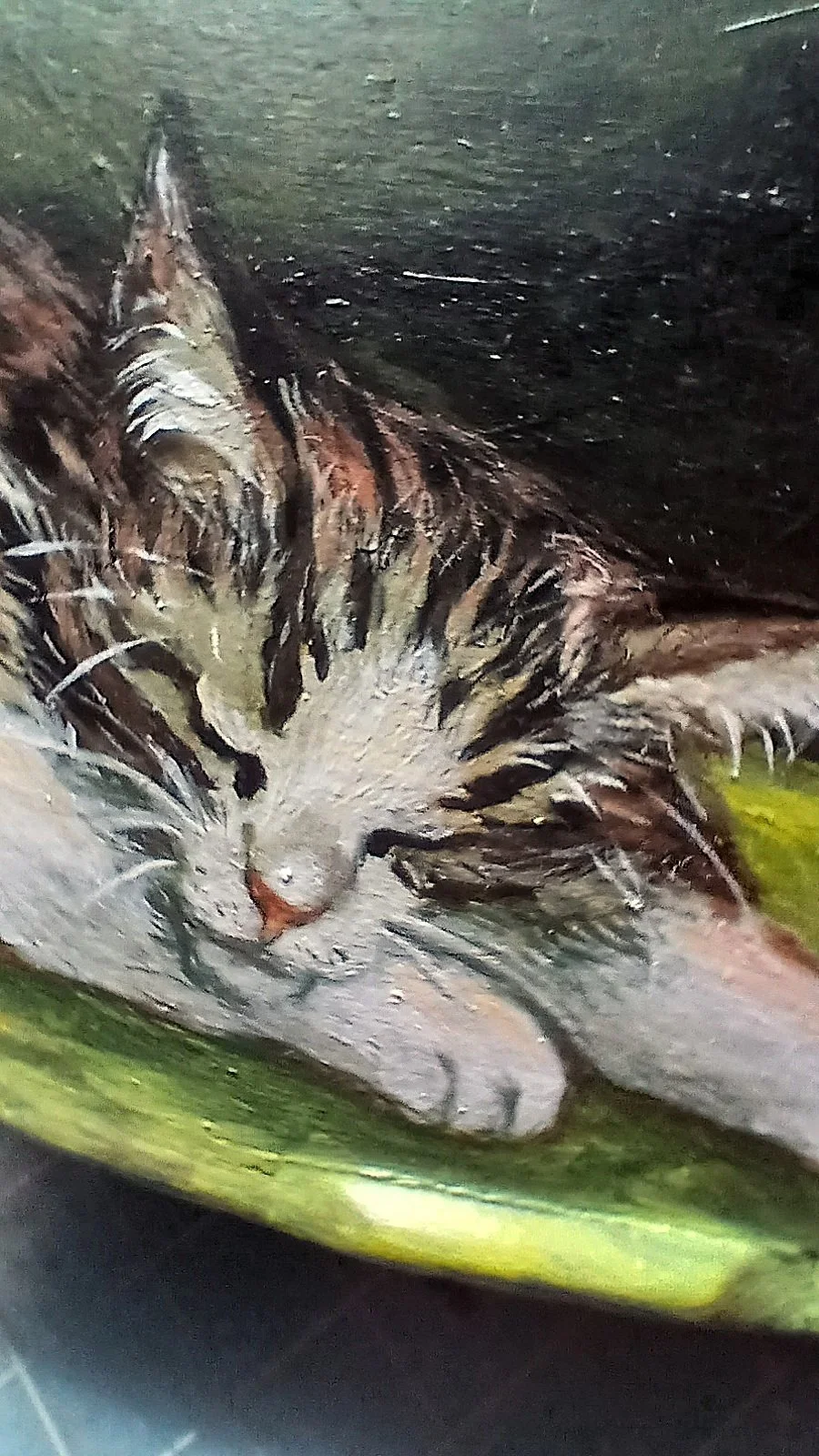
At this point in painting the violin, I’d moved my studio from my house to my boyfriend Derek’s house. After we moved my large worktable into the new location, I wanted to start working there. I felt a little sad leaving the old space behind, but I’m also excited to make this place my home.
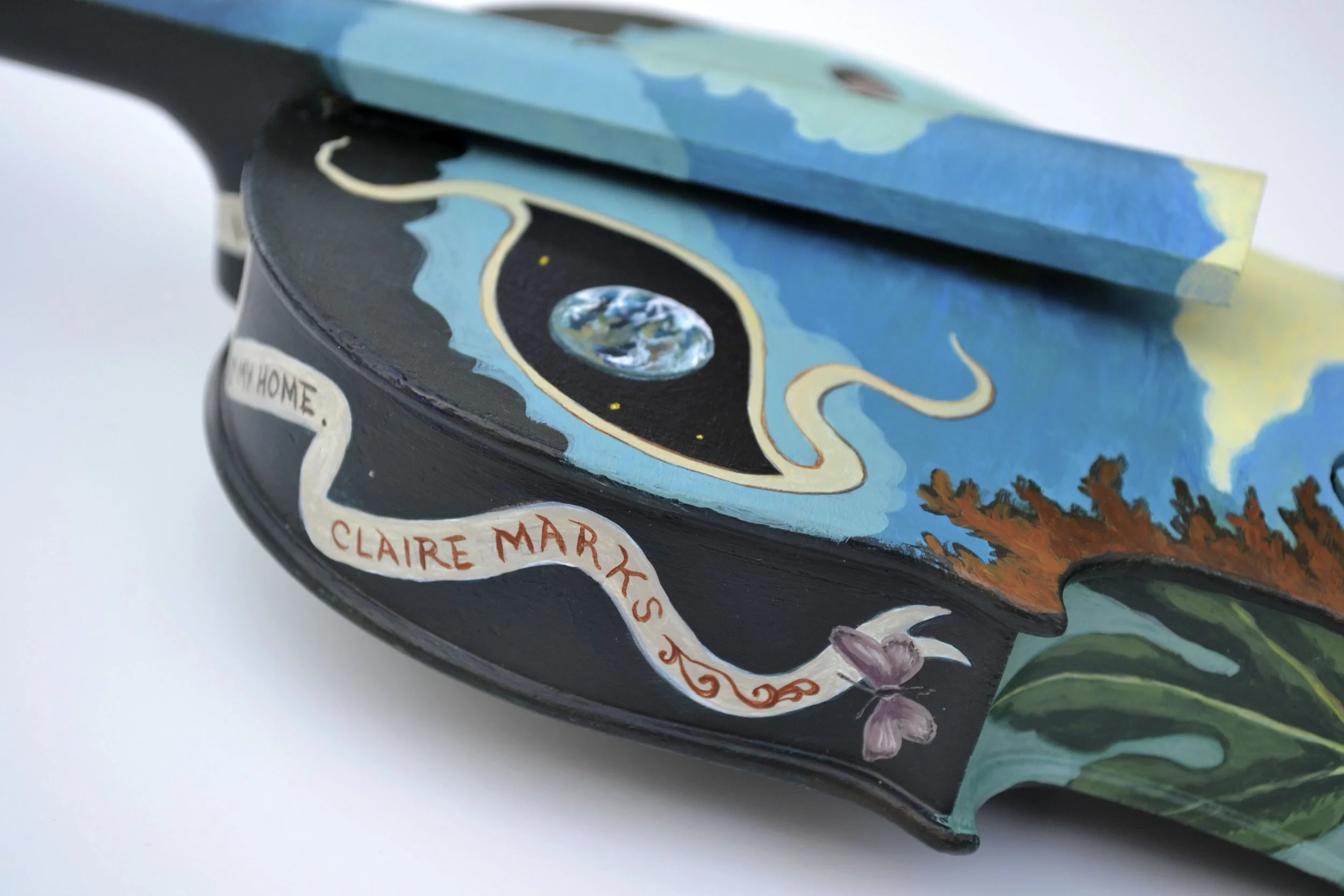
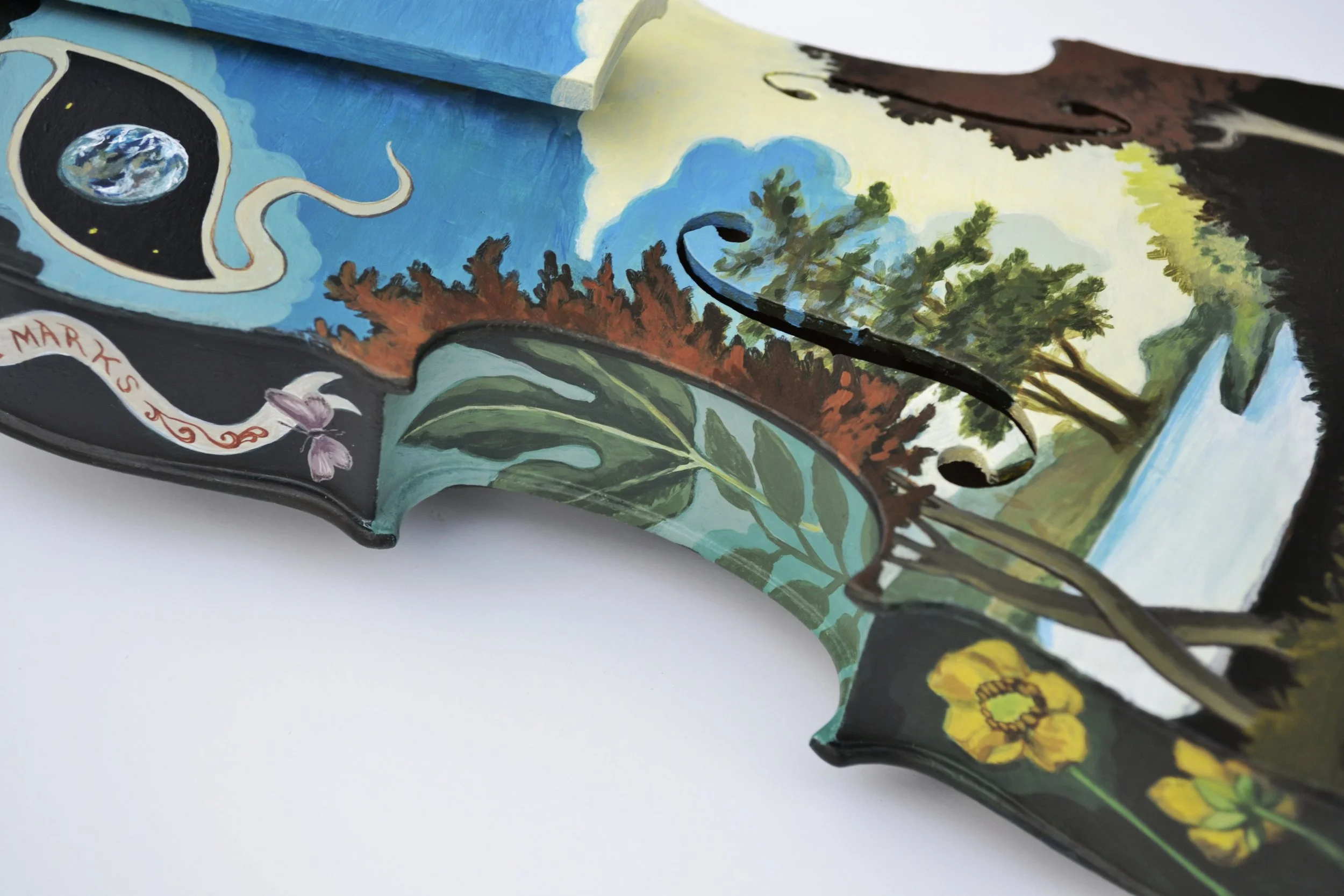
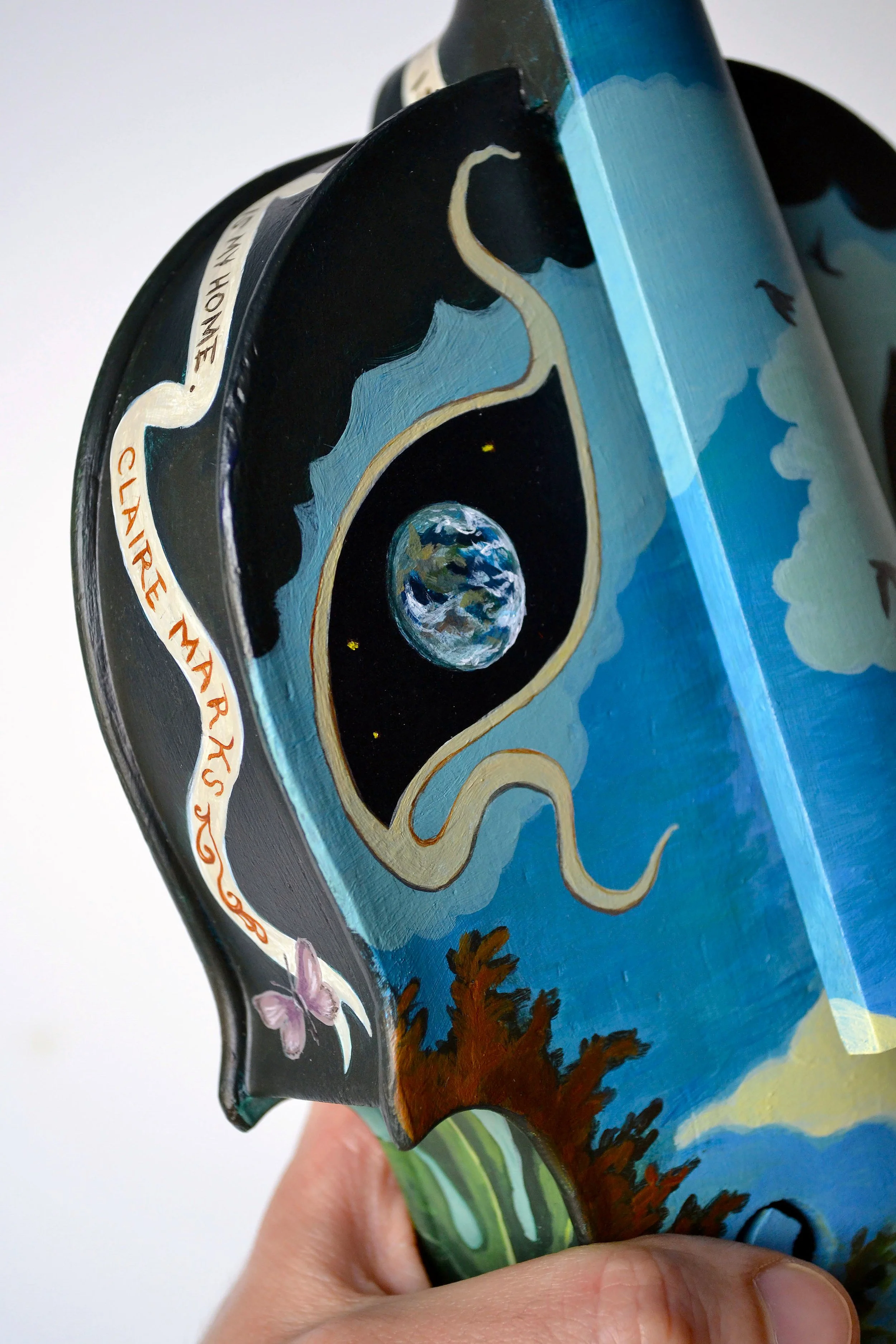
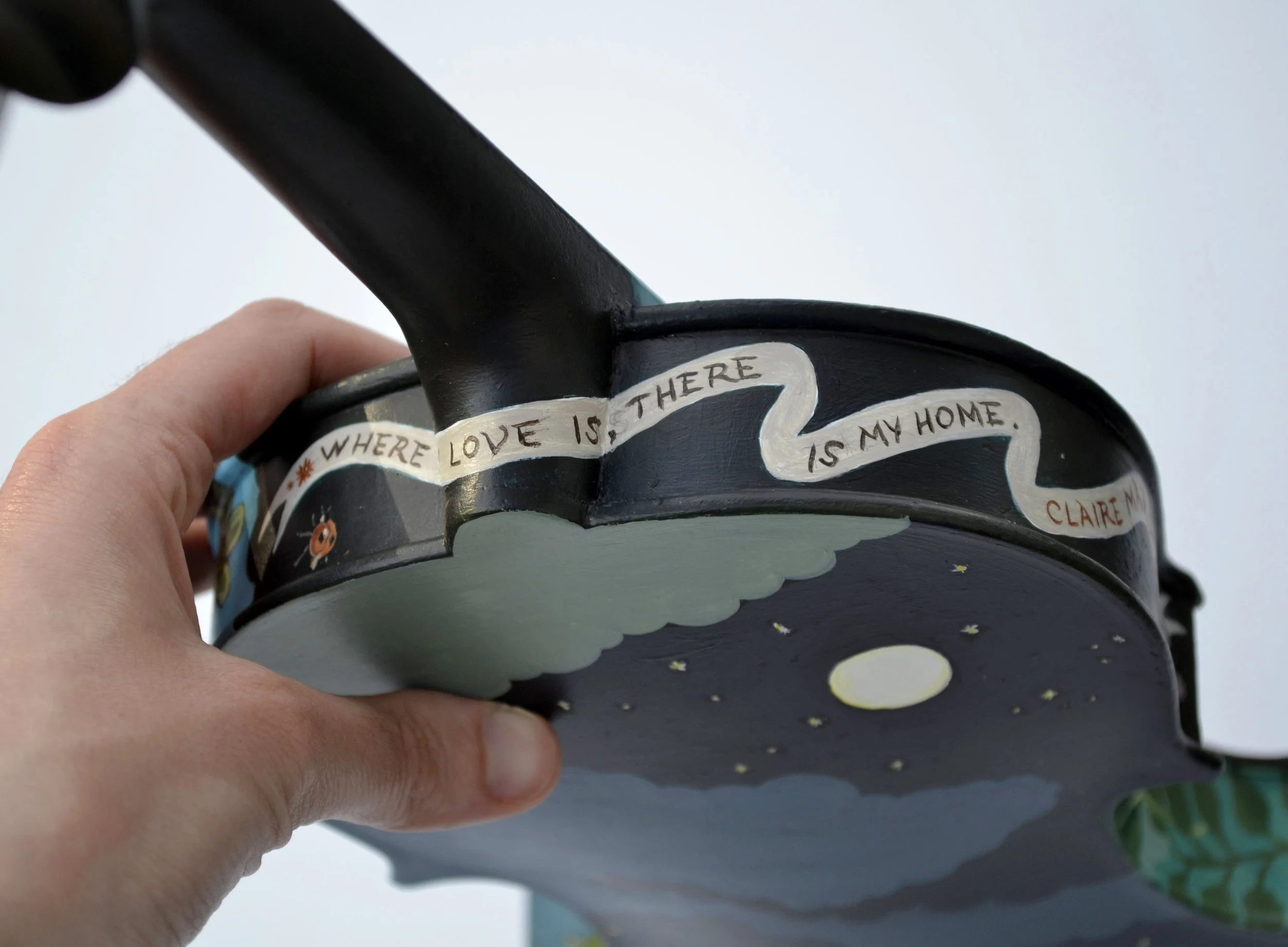
The phrase popped into my head: “Where my love is, there is my home.” I knew that would be the title of the piece, and what I would be writing on the banner I created on the upper section.
I had an inspiration when listening to the lectures of Nick Longrich. He talks about how intelligent life and habitual planets may actually be vanishingly rare. It got me into a feeling of awe and warmth for the special planet we call home. That’s when I got excited for a vignette opportunity, and I put in the planet Earth to honor my (expanded) home.
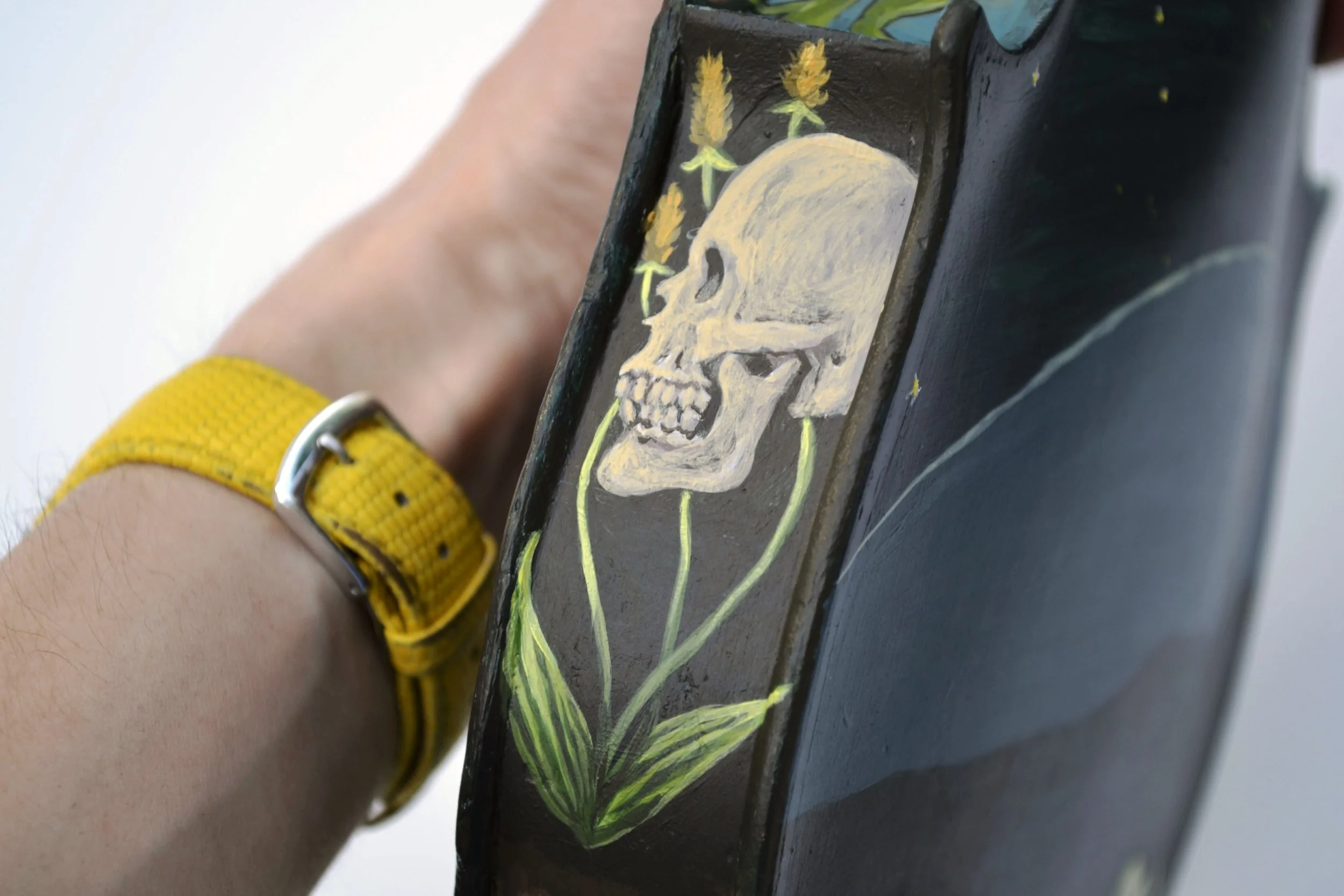
I added a crucial skeletal element. Death is an essential aspect of life, and it’s important for me to always remember that.
I painted in a couple insects, because I love them.
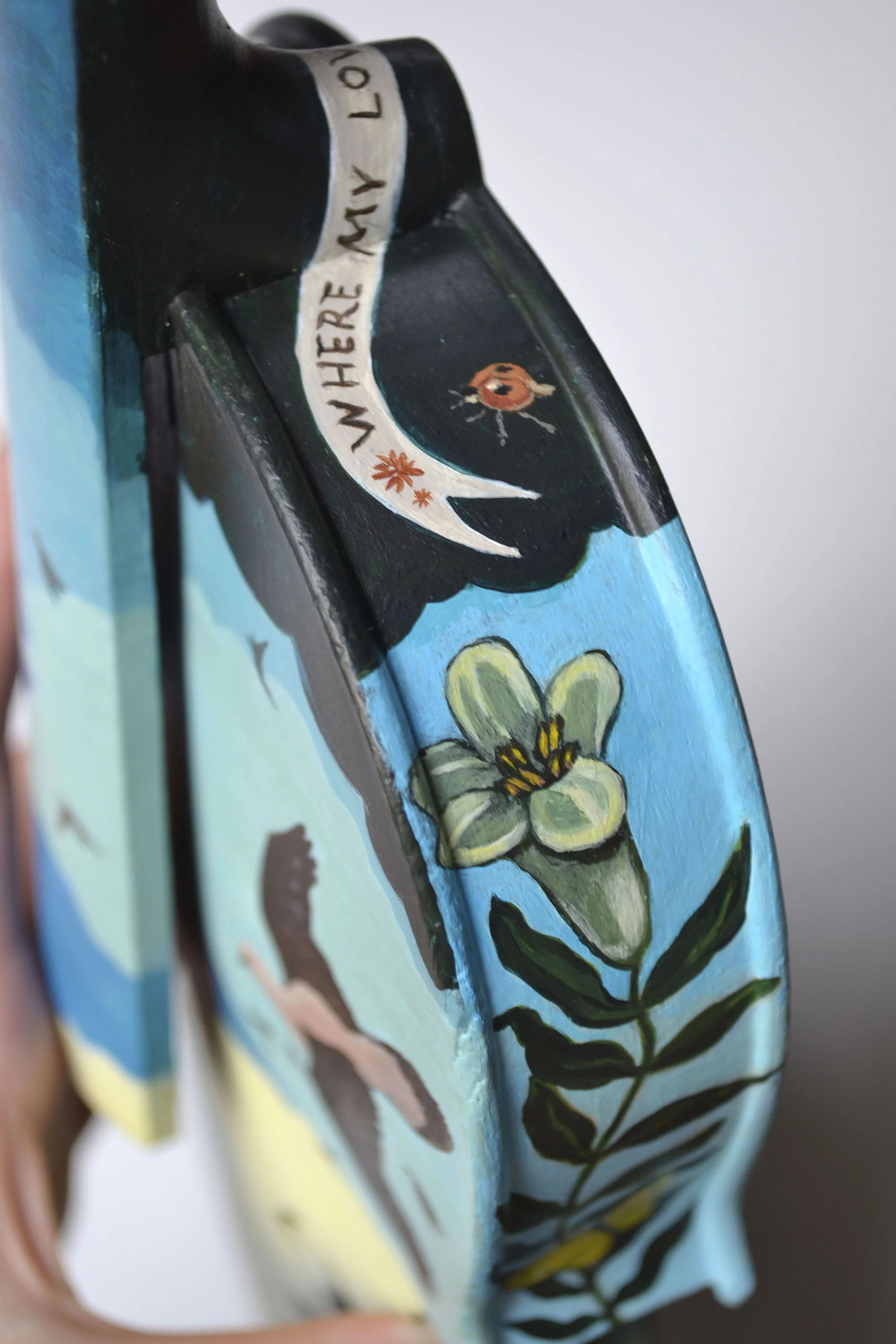
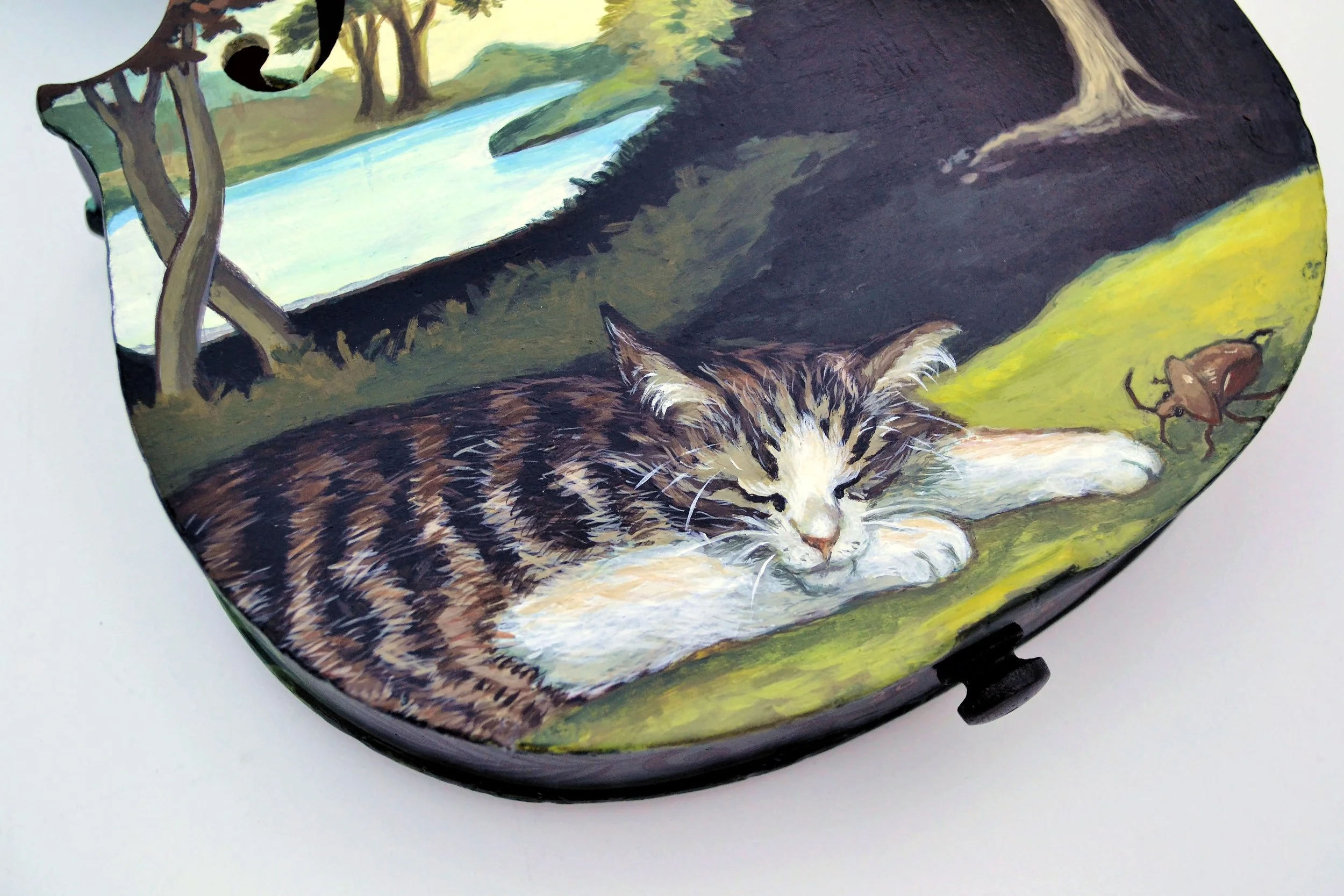
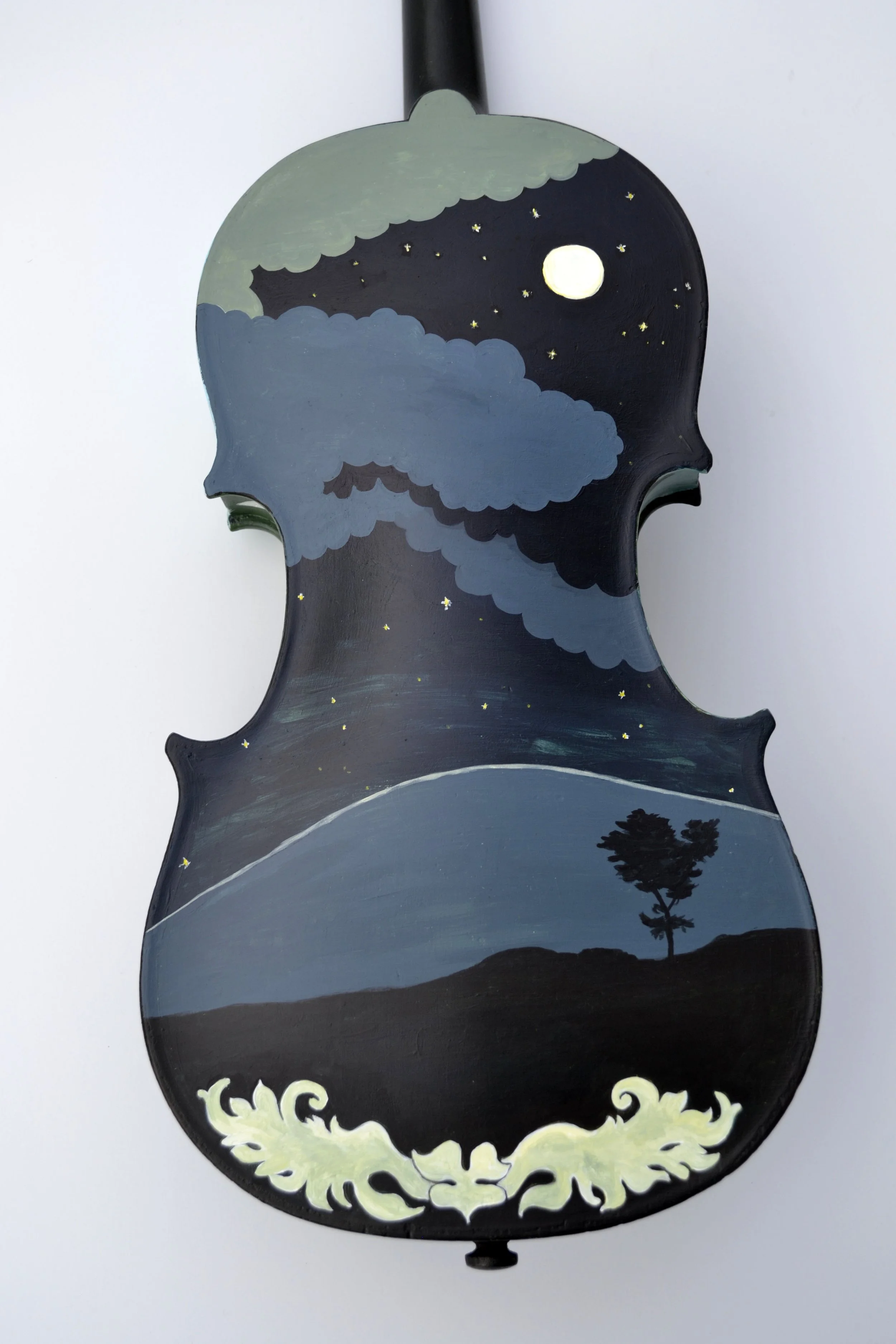
Where My Love Is, There is My Home.
Painted violin, acrylic
2026